Why the Butterfly Font by Gblack Id Is Reshaping Professional Typography Choices
Typography has long been one of the most underappreciated drivers of communication effectiveness. In a landscape where attention spans are compressed and visual noise is the norm, the right typeface can mean the difference between a message that lands and one that dissolves into the background. Enter Butterfly, a distinctive font by Gblack Id that has quietly generated discussion among designers, brand strategists, content creators, and business owners. On the surface, Butterfly presents as a clean, legible typeface with basic punctuation support. But beneath that simplicity lies a deliberate design philosophy that speaks directly to the evolving expectations of modern audiences.
What makes Butterfly worth a closer look is not its ornamentation or novelty. Rather, it is how the font navigates the tension between character and clarity, between standing out and being understood. Professionals across disciplines are beginning to recognize that typography is no longer a backend decision left to production teams. It is a front-line strategic tool. And Butterfly, with its measured proportions and grounded aesthetic, is fitting neatly into that realization.
What Butterfly Is and What It Represents
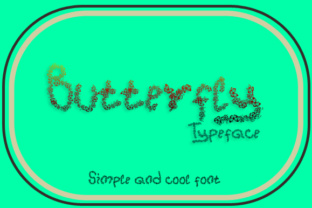
Butterfly is a typeface developed by Gblack Id, designed with basic punctuation and a form that balances geometric structure with organic readability. It is not a decorative or display font in the conventional sense. Instead, it occupies a space that is both utilitarian and expressive. The characters are constructed with a consistent weight, generous spacing, and a rhythm that supports extended reading while maintaining a distinct visual identity.
This combination is rarer than one might expect. Many typefaces prioritize either personality or practicality, seldom both. Butterfly avoids that trade-off. Its letterforms carry a subtle distinctiveness—slight asymmetries in terminals, carefully considered curves, and a stance that feels contemporary without chasing trends. The inclusion of basic punctuation means that it is immediately usable in real-world applications: website body copy, presentations, marketing collateral, and product interfaces. There is no need to hunt for alternate glyphs or patch in missing symbols. Butterfly arrives ready for work.
For professionals who evaluate typefaces on both aesthetic merit and operational utility, this is a meaningful distinction. The font does not ask you to compromise. It offers a coherent visual language that can carry brand tone, support readability, and reduce the friction that often accompanies typographic decision-making.
The Broader Shift in Typography and Brand Communication
To understand why Butterfly is gaining traction, it helps to look at the larger movements reshaping the typography landscape. Over the past five years, there has been a marked shift away from overly decorative or generic typefaces toward fonts that convey authenticity and intentionality. Brands are moving away from the safe, the sterile, and the over-polished. Audiences have become adept at detecting visual insincerity—a font that tries too hard to be edgy or one that feels like a default system choice immediately undermines credibility.
Butterfly fits into this trend by offering something that feels both crafted and restrained. It does not scream for attention, but it also does not fade into anonymity. In a market where typographic literacy among consumers is rising—where people subconsciously judge a company’s professionalism by its font choices—Butterfly provides a middle path that is increasingly hard to find.
Additionally, the rise of remote work, digital-first communication, and self-publishing has placed typography decisions into the hands of a much wider group of professionals. Entrepreneurs building their own websites, freelancers designing their own proposals, and marketers creating their own social assets all need typefaces that are forgiving, versatile, and visually credible. Butterfly answers that need. Its straightforward punctuation set and consistent character geometry mean that even non-designers can deploy it effectively without tripping over technical limitations.
Why People Are Paying Attention to Butterfly
Interest in Butterfly has grown organically, driven by several converging factors. First is the font’s adaptability across media. It performs well in both digital and print contexts, which is a requirement that many modern typefaces still struggle to meet. On screen, Butterfly renders cleanly at standard body sizes without losing its character. In print, it holds its weight and does not bleed or distort, even at smaller point sizes. This dual reliability reduces the need for multiple typeface pairings, simplifying brand systems and production workflows.
Second is the font’s resonance with the content-first approach that now dominates marketing and communication strategies. When the emphasis is on clarity of message, the typeface must support comprehension, not compete with it. Butterfly’s open apertures and balanced contrast aid readability across devices and reading conditions. For professionals who publish regularly—bloggers, newsletter writers, documentation teams—this directly translates to lower bounce rates and longer reading times.
Third, there is a growing appreciation for designers like Gblack Id who prioritize craft and consistency over novelty. The font community has seen an influx of rapid-release typefaces that prioritize quantity over quality. Butterfly stands apart because it feels finished. Every character, every punctuation mark has been considered. This level of polish matters to professionals who cannot afford typographic surprises in the middle of a project.
Changing Workflows and Expectations in Creative Fields
The creative workflow has evolved significantly in the last decade. Where once a designer might spend weeks selecting and pairing typefaces for a single project, the pace of modern production demands faster decisions without sacrificing quality. Butterfly simplifies this process by being self-sufficient as a primary typeface. Its character set supports headlines, subheads, body copy, and captions with a consistent voice. This reduces the cognitive load of managing multiple fonts and ensures visual cohesion across a project.
For freelancers and small studios, where time is the scarcest resource, this efficiency is not a minor convenience—it is a competitive advantage. Being able to open a project, apply Butterfly, and trust that it will perform across formats allows creatives to focus on substance rather than logistics. The font becomes a silent partner in the creative process rather than a persistent variable that needs constant adjustment.
Moreover, expectations around inclusivity and accessibility in typography are rising. Readable typefaces are no longer optional; they are a baseline requirement for professional communication. Butterfly’s design takes accessibility seriously. Its letterforms are distinct enough to reduce confusion between similar characters—such as lowercase l and uppercase I—which is a common pain point in many popular typefaces. For professionals producing content for diverse audiences, this attention to legibility is a tangible asset.
Practical Examples of Butterfly in Professional Contexts
Consider a marketing agency developing a brand identity for a wellness startup. The client wants to communicate calm, clarity, and modernity without resorting to overused sans-serif fonts. Butterfly provides the anchor for the visual system. It appears on the website’s body text, the email newsletter, the product packaging, and the presentation deck. Across every touchpoint, the font maintains its integrity. The basic punctuation ensures that the copy team never has to work around missing glyphs, and the consistent weight means that hierarchy can be established through size and spacing alone.
Or take a freelance consultant who produces white papers, proposals, and LinkedIn thought leadership content. They need a typeface that looks authoritative on screen and in print, that does not distract from the argument, and that signals professionalism to prospective clients. Butterfly fits that brief. Its restrained elegance communicates competence without arrogance. The consultant can produce a PDF, export slides, and publish a blog post all in the same typeface, building a cohesive personal brand without additional design overhead.
In educational technology, where interfaces must serve both learners and instructors, Butterfly’s readability at various sizes and its clean punctuation set reduce friction in the user experience. Tooltips, instructions, feedback messages, and assessment text all benefit from a typeface that prioritizes clarity. For product teams, choosing Butterfly means one fewer variable to worry about during usability testing.
Connecting Butterfly to Larger Industry Trends
The rise of typographic minimalism in digital product design has created a demand for typefaces that are both simple and distinctive. Butterfly aligns with this movement by offering a form that is stripped of unnecessary decoration but retains a unique character. It is not a copy of Helvetica or Arial; it has its own rhythm and proportion. For brands seeking to differentiate themselves within the constraints of minimalist design, Butterfly provides a way to stand out without breaking the visual system.
Another trend that Butterfly taps into is the independence of digital creators. As more professionals build their own platforms—newsletters, online courses, membership sites—they are making typography choices that were once reserved for design departments. These creators need fonts that are affordable, licensable, and reliable. Butterfly, by being a focused release from an independent designer, represents a shift toward specialized, high-quality tools that serve specific needs rather than one-size-fits-all solutions.
Finally, there is the broader cultural shift toward authenticity in branding. Audiences are tired of stock photography, generic templates, and corporate language. They want to see evidence of human judgment and care. A thoughtfully chosen typeface like Butterfly signals that a brand pays attention to details that matter. It communicates that the people behind the brand understand craft. In an era where trust is a fragile commodity, that signal carries weight.
Butterfly as a Strategic Typographic Choice
For professionals evaluating their typography stack, Butterfly offers more than just aesthetic appeal. It represents a strategic alignment with how modern audiences consume content: quickly, across devices, and with a low tolerance for friction. The font’s basic punctuation support, while seemingly a minor detail, removes one of the most common obstacles to seamless typographic implementation. Missing glyphs and inconsistent punctuation are among the top frustrations for designers and developers working with new typefaces. Butterfly eliminates that concern outright.
Beyond the technical, Butterfly is a font that respects the reader. It does not impose itself. It facilitates understanding. For professionals whose work depends on being understood—which is to say, nearly every professional—that is the highest compliment a typeface can receive. The font is not a statement in itself; it is a vehicle for the statement the professional wants to make.
As the typography landscape continues to evolve, with new releases appearing weekly and audience expectations rising in tandem, the typefaces that endure will be those that balance personality with practicality, distinction with discipline. Butterfly, by Gblack Id, is precisely such a typeface. It is a tool designed for the way professionals actually work today: fast, cross-platform, content-heavy, and audience-aware. For anyone serious about communication, it deserves a place in the toolbox.
Ultimately, the conversation around Butterfly is not really about a font. It is about a shift in how professionals think about the infrastructure of communication. Typography is no longer a background detail. It is a core component of brand perception, user experience, and content effectiveness. Butterfly arrives at a moment when that truth is becoming impossible to ignore. And it arrives ready to work.