Sapoetry: A Display Font That Brings Feeling to the Page
What Exactly Is Sapoetry?
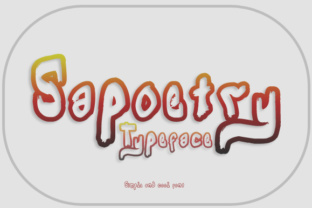
Sapoetry is a handwritten display font created by Gblack Id that strikes an uncommon balance between expressive character and practical readability. At first glance, it feels personal—like something written by hand with intention rather than speed. The letterforms carry a natural rhythm, with slight irregularities that keep the eye engaged without veering into illegibility.
Unlike many handwritten fonts that lean either too rigid or too wild, Sapoetry sits in a comfortable middle ground. The strokes have weight. The curves feel deliberate. It’s not trying to imitate perfect penmanship, nor is it chasing that exaggerated, brush-splash energy. Instead, it reads like someone who cares about how their words look took the time to write them well.
Basic punctuation is included, which might sound like a small detail, but anyone who has tried to build a headline with a script font that’s missing an exclamation mark or a question mark knows how quickly a project can stall. That completeness makes Sapoetry immediately usable, not just something to admire in a font preview.
The Visual Character of Sapoetry
Sapoetry falls into the handwritten font category, but it also carries traits you’d associate with a creative font that has serious design thinking behind it. The ascenders and descenders are generous without being distracting. The x-height is moderate, which helps the font hold up in shorter paragraphs, not just in large display settings.
There’s a warmth to the letterforms. The rounded terminals soften the overall impression, making the font feel approachable rather than formal. At the same time, the consistent stroke contrast gives it structure. It’s not a sloppy handwritten font—it’s a considered one. That distinction matters when you’re choosing type for a project that needs to communicate both personality and professionalism.
In terms of modern typography, Sapoetry fits alongside fonts that prioritize expression without sacrificing function. It’s not trying to be a neutral workhorse. It’s a display font, meant to be seen and felt. But it also doesn’t demand that every other element in your layout shrink away. It can hold its own beside clean sans serif fonts or even a restrained serif font in supporting roles.
Branding and Logo Design
If you’re building a brand identity for a business that wants to communicate craftsmanship, creativity, or a personal touch, Sapoetry brings genuine character. It works especially well for boutique shops, studios, cafés, wedding-related businesses, and independent makers. In logo design, the font carries enough personality to stand alone as a wordmark, which is a real strength—many handwritten fonts need heavy customization before they work as logos. Sapoetry reads well right out of the box.
Editorial and Packaging Design
For editorial design, Sapoetry shines in pull quotes, section headers, and accent text. It adds a human layer to layouts that might otherwise feel mechanical. In packaging design, it brings warmth to product labels, especially for artisanal goods, skincare, candles, or food products where the story behind the item matters as much as the item itself.
Social Media and Web Design
Social media graphics need fonts that grab attention fast. Sapoetry works well for Instagram quotes, story titles, and promotional graphics where you have limited space and need maximum impact. In web design, it functions best as a display font for hero headings or brand statements. Pair it with a clean sans serif font for body text, and you get a hierarchy that feels both modern and personal.
Personal and Small Business Projects
For crafters, hobbyists, and small business owners, Sapoetry offers a premium font feel without requiring a deep design background. If you’re making invitations, product tags, signage, or social media templates, this font does the heavy lifting. It looks intentional. It doesn’t scream “I used a default font.” That matters when you’re trying to build recognition and trust with your audience.
How Sapoetry Affects Readability and Brand Perception
Readability in a display font is always a layered conversation. Sapoetry won’t work for a 500-word product description set at 12 points—that’s not what it’s built for. But for the things it is built for—headlines, short blocks of text, emphasis—it performs well because the letterforms are distinct from one another. There’s no confusion between n and u or h and b, which is a common pitfall in loosely constructed handwritten fonts.
From a brand perception standpoint, Sapoetry signals care. When you use a font that has this level of personality, people notice. Not consciously always, but they feel it. A brand identity built around a font like this one communicates that the business values aesthetic detail. That’s not a small thing. In crowded markets, the way your brand looks is often the first differentiator a potential customer encounters.
Consistency is another factor. If you’re a content creator or publisher producing social media graphics, email headers, or printed materials, using Sapoetry across formats builds visual continuity. People start to associate that hand-drawn warmth with your content. That’s recognition. And recognition builds trust over time.
Evaluating Project Fit
Before you commit to Sapoetry, ask yourself what role the font will play. If it’s going to carry your logo or headline, you’re in good territory. If you need it to do heavy lifting in long body copy, you’ll want to pair it with something more neutral. Think of Sapoetry as the voice that speaks first. It gets attention. Then let a cleaner typeface handle the details.
Font Pairing Suggestions
Sapoetry pairs naturally with simple sans serif fonts like Montserrat, Open Sans, or Lato for body text and secondary headings. If you want something more refined, a thin serif font like Playfair Display or Cormorant Garamond creates an elegant contrast—the serif brings structure, while Sapoetry brings emotion. Avoid pairing it with another busy handwritten font. Let Sapoetry be the personality in the room.
Reviewing Included Styles and Licensing
Since Sapoetry includes basic punctuation, you’re covered for most standard usage. But always check what glyphs are included before starting a project, especially if you need special characters or accented letters. For commercial font use, confirm the license covers the specific applications you have in mind—web embedding, print reproduction, merchandise, or digital products. Gblack Id typically provides clear licensing terms, but it’s your responsibility to match the license to your use case.
Readability Considerations
When using Sapoetry in digital formats, pay attention to size. At smaller sizes on screens, handwritten fonts can lose their definition. Test the font at the actual dimensions it will appear in, on the devices your audience will use. A font that looks clear in a design mockup at 100% zoom might blur or lose distinction at actual display size on mobile.
Why Sapoetry Deserves a Spot in Your Design Assets
There are a lot of handwritten fonts available. Some are free. Some are expensive. Some look like they were drawn in a hurry. Sapoetry stands out because it was built with a clear sense of purpose. It’s a creative font that understands its limits. It knows when to lead and when to step back. That awareness is rare in display fonts, and it makes the font easier to work with across different project types.
For designers, Sapoetry adds a reliable tool to the kit. For entrepreneurs and small business owners, it offers a way to make branding feel personal without needing a custom typeface. For marketers and publishers, it brings emotional weight to headlines and visual content. And for crafters and hobbyists, it elevates projects from “made at home” to “made with care.”
If you’re assembling a collection of design assets that balance versatility and personality, Sapoetry earns its place. It’s not a one-trick font. It’s a thoughtful piece of modern typography that understands how type works in the real world—across print, screens, packaging, and brand materials. And that kind of utility, combined with genuine visual appeal, is what makes a font worth returning to again and again.