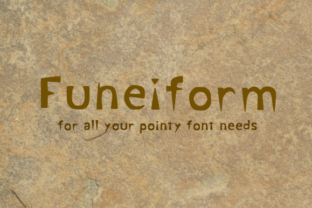
Funeiform: A Sharp, Pointy Display Font That Commands Attention
When a project calls for a typeface that refuses to be ignored, designers often turn to display fonts with strong personality. Funeiform, created by Marlee Pagels, delivers exactly that—a sharp, pointy display font that balances aggression with elegance. Its angular forms and razor-like terminals make it a powerful choice for headlines, branding, and any visual where impact matters more than subtlety. But what exactly makes Funeiform stand out in a crowded field of decorative typefaces? And more importantly, how can you use it effectively without overwhelming your design?
Let’s break down the unique qualities of Funeiform, explore practical applications, and consider the factors that will help you decide whether this font is the right fit for your next project.
The Design DNA of Funeiform
At first glance, Funeiform announces itself through geometry. Every stroke seems to have been carved with a purpose—no curve is incidental. The font belongs to the display category, meaning it is intended for large sizes where its details can breathe. Its letterforms are constructed from sharp, acute angles and pointy ends that evoke everything from medieval manuscripts to modern minimalism. Marlee Pagels has managed to fuse historical blackletter influences with a contemporary edge, creating a typeface that feels both ancient and futuristic.
Key characteristics include:
- Extreme contrast between thick and thin strokes, giving each letter a dramatic, almost calligraphic weight shift.
- Pointed terminals that literally pierce the white space around them, adding visual tension.
- Narrow proportions that allow for tight, impactful word stacks.
- Unified angularity even within rounded letters like o and e, which maintain a slight dagger-like quality.
This combination makes Funeiform instantly recognizable. It carries a mood that is simultaneously authoritative and rebellious—think luxury metal branding, dystopian sci-fi posters, or underground music festival identities.
Where Funeiform Shines – Practical Use Cases
Because of its strong personality, Funeiform is not a font you sprinkle into body text. Instead, it is a feature player. Here are specific scenarios where it performs exceptionally well:
Poster and Billboard Design
Large-format work is Funeiform’s natural habitat. On a movie poster or concert flyer, its pointy serifs and sharp angles grab attention from a distance. Imagine a poster for a dark fantasy film: the title set in Funeiform immediately conveys danger, mystery, and a medieval undertone. The font’s high contrast also helps it stand out against busy backgrounds, as long as you provide enough spatial breathing room.
Branding for Music, Fashion, and Tech
Brands that want to project an edgy, premium, or non-conformist identity can leverage Funeiform’s attitude. A metal band’s logo, a streetwear label’s tagline, or a cybersecurity startup’s wordmark—each can benefit from the font’s sharpness. The key is restraint: using Funeiform for the core identifier and pairing it with cleaner typefaces for supporting text ensures the brand remains legible across touchpoints.
Editorial Titles and Chapter Headings
Magazines and books that cover topics like architecture, fashion, or experimental design can use Funeiform for chapter heads or pull quotes. Its distinct silhouette adds a tactile, crafted feel to an otherwise digital layout. For example, a spread about gothic architecture might open with a Funeiform title that mirrors the pointed arches found in the subject.
Packaging for Premium or Niche Products
Luxury spirits, perfumes, or limited-edition snacks can use Funeiform to signal exclusivity and craftsmanship. On a dark bottle label, the font’s sharp strokes create a striking contrast with matte or metallic finishes. Keep text minimal—perhaps just the product name and a tagline—to let the typeface do the heavy lifting.
Pairing Funeiform with Complementary Fonts
Relying solely on Funeiform can lead to visual fatigue. A common mistake is using it for everything, which often results in a chaotic, unreadable layout. The solution lies in thoughtful pairing. Because Funeiform is high-contrast and angular, it pairs best with typefaces that offer neutrality, softness, or even a touch of warmth. Here are some recommendations:
With Geometric Sans-Serifs
Fonts like Futura or Helvetica Now provide a calm, rational counterpoint to Funeiform’s aggression. Use the sans-serif for body copy or smaller headings, and reserve Funeiform for primary headlines. The geometric shapes in the sans-serif echo Funeiform’s precision but without the sharpness, creating a balanced hierarchy.
With Humanist Serifs
A softer serif, such as Garamond or Dante, introduces a humanistic, readable element that contrasts nicely with Funeiform’s mechanical feel. This pairing works well in editorial projects where a long article needs an inviting text face while the title remains punchy.
With Rounded or Script Typefaces
For a more playful or approachable vibe, try pairing Funeiform with a rounded sans-serif (like Karla) or a flowing script (like Playlist). The roundness softens the overall impression, making the design feel less hostile. This is especially effective in youth-oriented branding or event materials.
When pairing, pay attention to contrast in weight, x-height, and spacing. Funeiform’s tall x-height means it will dominate, so you may need to increase the size of the secondary font to achieve visual balance.
What to Consider Before Using Funeiform
Before you download and deploy Funeiform, take a few practical factors into account. The font’s characteristics that make it so compelling also impose limitations:
- Legibility at small sizes. Funeiform’s fine strokes and pointy terminals can disappear at 12pt or less. Avoid using it for body text, captions, or anything below 18pt in print (24pt on screen). If you must use it at smaller sizes, consider increasing tracking and choosing a lighter weight if available.
- Screen performance. On low-resolution screens, the thin parts of Funeiform may flicker or pixelate. For digital designs, test it at your intended size and on multiple devices. Anti-aliasing settings can make a big difference.
- Readability in all-caps. Funeiform is often used in uppercase because of its strong silhouette, but extended all-caps lines can become hard to parse. Use it sparingly—maybe for one or two words—and rely on case variation or size hierarchy for clarity.
- Licensing and availability. Check the license from the foundry or marketplace where you purchase Funeiform. Some display fonts come with restrictions on web use, commercial projects, or number of users. Clarify usage rights early to avoid legal headaches later.
Tips for Integrating Funeiform into Your Workflow
Once you decide to incorporate Funeiform, a few tactical approaches will help you get the most out of it:
- Adjust tracking and kerning. At large sizes, Funeiform’s sharp letters can visually crash into each other. Adding 20–50 units of tracking creates breathing room. For titles, tighten kerning selectively to maintain a cohesive word shape.
- Use color strategically. A monochrome palette (black, white, metallics) emphasizes Funeiform’s texture. Adding a single accent color to key letters or backgrounds can highlight meaning without cluttering the look.
- Experiment with orientation. Because Funeiform has such a dynamic shape, rotating titles or stacking characters vertically can produce dramatic compositions. Just keep readability in mind—test with your target audience.
- Combine with texture. Funeiform works beautifully on textured backgrounds: linen, concrete, wood grain, or grunge overlays. The contrast between the crisp type and a rough surface adds depth and tactile interest.
- Test in grayscale. Before finalizing any design, convert it to grayscale. If Funeiform loses its impact without color, you may need to adjust weight, spacing, or background contrast.
The Creative Mind Behind the Font – Marlee Pagels
Understanding an artist’s intent can deepen your use of a typeface. Marlee Pagels is known for designing fonts with strong narrative qualities, often drawing from historical forms and modern minimalism. With Funeiform, Pagels wanted to create a typeface that “cuts through the noise”—literally sharp enough to leave an impression. The design process likely involved many iterations to ensure that each pointed stroke felt intentional rather than chaotic. This attention to detail is what separates a mediocre display font from one that designers reach for again and again.
Pagels’ work on Funeiform reflects a broader trend in typography: the resurgence of ornamental, high-contrast faces in digital and print media. But unlike many revival typefaces, Funeiform does not simply copy the past. It reinterprets it through a contemporary lens, making it suitable for modern applications without feeling derivative.
Bringing It All Together
Funeiform is more than a novelty font—it is a versatile tool for designers who know how to wield its power. Its sharp, pointy nature demands attention, but also requires careful consideration of context, pairing, and scale. When used thoughtfully, it can elevate a project from ordinary to unforgettable. Whether you are designing a poster for a metal concert, a label for a niche spirit, or a brand identity for a digital-native startup, Funeiform offers a distinctive voice that won’t go unnoticed.
As with any display typeface, test it early, test it often. Use it where it shatters expectations—headlines, logos, short bursts of text—and support it with quieter companions elsewhere. Marlee Pagels has given the design community a sharp instrument; the rest is up to you.