Evaluating Twinable: A Rounded Typeface with Logo-Ready Personality
When you are researching typefaces for a brand project, a website redesign, or a print identity, the options can feel overwhelming. Serif, sans serif, slab, script, geometric, humanist — each category carries its own visual weight and emotional subtext. Twinable enters this landscape as a rounded typeface that is often described as the rounded brother of Agroable. But calling it simply a rounded variant would miss the point. Twinable has its own personality, its own rhythm, and its own set of practical strengths that make it worth a closer look — especially if you are evaluating fonts for logo work or headline applications.
This article offers a practical, balanced look at Twinable. We will explore what makes it distinct, where it shines, where it may not be the best fit, and how it compares conceptually with other typeface categories you might be considering. The goal is not to declare Twinable the universal winner, but to help you decide whether it deserves a place in your shortlist — and if so, how to use it well.
What Twinable Is — and What Sets It Apart
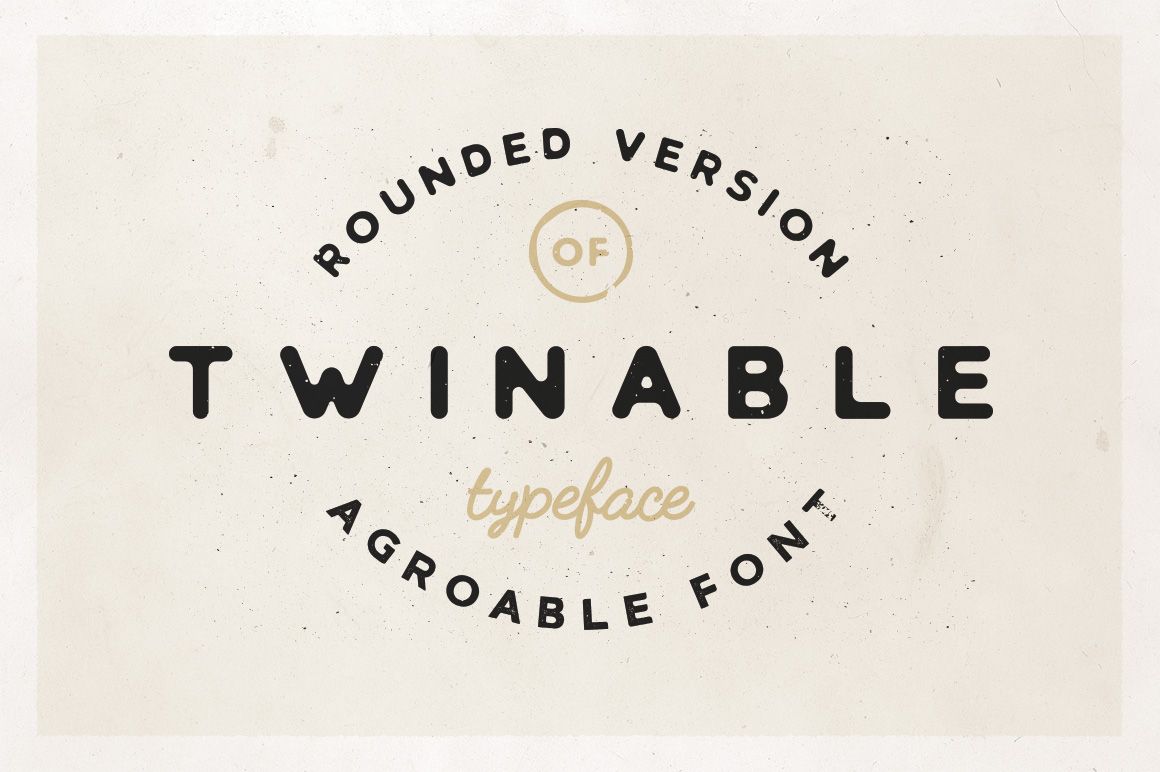
Twinable is a rounded typeface with a structure that feels approachable without sacrificing clarity. Its rounded terminals and softer corners give it a friendlier, more human tone than a strict geometric sans, while its consistent stroke weight and relatively neutral proportions keep it from tipping into whimsy or novelty. This balance between warmth and professionalism is one of its strongest cards.
Being the rounded brother of Agroable means Twinable shares some DNA with that family — similar skeletal structure, comparable x-height, and a related sense of proportion. But the rounding is not a superficial treatment applied after the fact. The curves in Twinable feel integral to the design, influencing how letters interact and how the type behaves at different sizes. The result is a face that reads as both familiar and distinct — a useful combination when you need a font to stand out without shouting.
Twinable performs particularly well in logotypes. Its rounded shapes create a strong visual silhouette that remains legible even when scaled down for favicons or social media avatars. At the same time, the letterforms retain enough unique detail to avoid looking generic — a common trap with overly simplified rounded typefaces. If you are comparing fonts for a logo, Twinable offers a credible option that works either as the primary wordmark or as a secondary font for a tagline or slogan. In that supporting role, its rounded quality can soften a harder-edged primary type or reinforce a friendly, approachable brand voice.
How Twinable Compares with Similar Typeface Categories
To understand where Twinable fits best, it helps to compare it conceptually with other typeface categories you might be weighing. This is not about ranking one above another, but about understanding tradeoffs so you can match a typeface to your specific project needs.
Rounded Sans vs. Standard Geometric Sans
A standard geometric sans — think of the clear, precise forms found in many modern brand guidelines — communicates efficiency, simplicity, and sometimes austerity. Twinable retains much of that geometric clarity but replaces the sharp corners with gentle curves. The practical effect is a shift in emotional tone: the same clean structure, but with more warmth and less formality. If your brand needs to feel trustworthy and competent but also welcoming, Twinable bridges that gap more naturally than a strict geometric sans might.
However, if your project demands maximum neutrality or a very technical, no-nonsense feel, a standard geometric sans may serve you better. Twinable's rounding introduces a subtle personality that could feel out of place in ultra-corporate or industrial contexts. Consider the environment: Twinable fits a friendly tech startup, a health and wellness brand, or a creative agency; a hard-edged geometric sans may be better suited for a law firm or engineering consultancy.
Rounded Sans vs. Humanist Sans
Humanist sans serifs draw inspiration from handwriting and calligraphy, with varying stroke widths and more organic shapes. They often feel warm and readable at length. Twinable shares some warmth with humanist faces but achieves it differently — through curves rather than through stroke contrast. The result is a cleaner, more consistent texture. Twinable may be a better choice when you need warmth without the irregularity that sometimes comes with humanist designs. Conversely, if your project calls for a more hand-crafted, organic feel, a true humanist sans could provide that nuance better than Twinable's more uniform rounding.
Rounded Sans vs. Slab Serif
Slab serifs carry weight and authority through their blocky serifs. They are often used to project stability and tradition. Twinable is a different animal entirely. It is lighter in visual mass and more contemporary in feel. If you are choosing between a slab serif and a rounded sans like Twinable, the decision hinges on the brand voice you want: anchored and historical (slab) versus friendly and modern (rounded). Twinable can still convey confidence — especially at larger sizes — but it does so without the gravitas of a slab. For a tagline or secondary element, Twinable can lighten the tone of a slab-heavy identity.
Where Twinable Excels: Best-Fit Situations
Based on its characteristics and the comparisons above, several use cases stand out as natural fits for Twinable.
- Logotypes for friendly, modern brands. Twinable's rounded personality works well for brands in the consumer tech, lifestyle, wellness, education, and creative sectors. It signals approachability without sacrificing professionalism.
- Taglines and slogans. When paired with a more serious or condensed primary typeface, Twinable's softer forms can provide a complementary contrast. It reads as supportive and clear, never competing with the main mark.
- Headlines in editorial or web design. At display sizes, the rounded forms create a distinctive rhythm. Twinable holds its own in headings while remaining easy to scan.
- Applications requiring legibility at small sizes. The open counters and generous x-height that Twinable inherits from its Agroable roots make it functional for small text — buttons, navigation labels, or footnotes — though body copy is not its primary strength.
- Environmental or signage applications. Rounded typefaces often perform well in directional signage and wayfinding because the forms are easy to read quickly and from angles. Twinable's clean silhouette supports this use case.
Tradeoffs and Limitations to Consider
No typeface is a universal tool, and Twinable has limitations that are worth weighing against your project requirements.
It is not a text face for long reading. Twinable's design is optimized for display and headline use. While it can work in short paragraphs, it is not intended for extended body copy. If your project involves pages of continuous text, you will likely want a dedicated text face — and possibly use Twinable only for headings and subheadings. This is a common tradeoff with rounded display faces; their characterful shapes can become tiring at reading sizes.
The rounding may feel too playful for some contexts. If your brand needs to project authority, tradition, or luxury, Twinable's softer edges could clash with that image. A sharp serif or a crisp geometric sans would likely be a better match. Twinable is versatile, but it has a personality that will not suit every brief.
Limited character set or style options. Depending on the specific version of Twinable you are evaluating, you may find it offers a narrower range of weights or styles compared to a full font superfamily. If your project requires many variants — thin to black, italic, condensed — check the coverage before committing. You may need to supplement Twinable with a complementary typeface for versatility.
Potential for trendiness. Rounded typefaces cycle in and out of fashion. While Twinable is well-designed and unlikely to feel dated quickly, it does belong to a category that is currently popular in certain design circles. If you are designing for a brand that needs to feel timeless for decades, consider whether a less stylized face might be a safer long-term bet.
Making the Decision: When to Choose Twinable — and When to Look Elsewhere
Choosing a typeface is a matter of matching personality to purpose. Here is a framework to help you decide whether Twinable aligns with your project.
Choose Twinable when:
- You are designing a logo or brand mark and want a friendly, approachable tone that still reads as professional.
- You need a secondary font for a tagline that will sit beneath a more structured primary logo.
- Your brand audience includes families, younger adults, or consumers in lifestyle and wellness markets.
- You want a typeface that stands out from generic sans serifs without being quirky or hard to read.
- You value legibility at small sizes in digital interfaces or signage.
Consider alternatives when:
- Your project requires extensive body copy — look for a dedicated text face.
- Your brand identity must convey traditional authority, luxury, or technical precision.
- You need a full superfamily with many weights, italics, and special characters.
- The brand voice is deliberately neutral or institutional, where any personality in the typeface could feel distracting.
- You are designing for a very conservative industry where rounded fonts may be perceived as too casual.
Practical Examples of Twinable in Use
To make the decision more concrete, consider realistic scenarios where Twinable fits naturally.
Example 1: A wellness app. The primary logo uses a clean, slightly condensed sans serif. The tagline — "Find your balance" — is set in Twinable. The rounded forms soften the overall identity and make the brand feel accessible to users seeking calm and support. The app's interface headings also use Twinable at medium weight, while body text uses a neutral system font.
Example 2: A creative co-working space. The logo is a geometric wordmark, but the slogan — "Work where you belong" — appears in Twinable. The contrast between the sharp logo and the rounded tagline signals that the space is professional but also community-focused. Twinable's legibility at small sizes works well on signage and social media graphics.
Example 3: A children's educational toy brand. Twinable serves as the primary logo typeface. Its rounded, friendly shapes appeal to both children and parents. The brand uses Twinable in a bold weight for packaging headlines and in a regular weight for short product descriptions. The typeface's warmth aligns with the brand's emphasis on playful learning.
In each of these scenarios, Twinable is chosen because its personality matches the brand voice, not because it is trendy or convenient. That alignment is what makes a typeface work.
Final Thoughts on Evaluating Twinable
Twinable offers a distinctive blend of clarity and warmth that sets it apart from both standard geometric sans serifs and more ornate rounded faces. Its roots in the Agroable family give it structural integrity, while its own rounded character gives it a personality that is particularly well suited for logo work, taglines, and display applications. It is not a replacement for a full text face, nor is it the right choice for every brand identity. But for projects where approachability and professionalism need to coexist — and where a clean, rounded silhouette can carry the visual message — Twinable deserves serious consideration.
As you evaluate typefaces for your next project, test Twinable in context. Pair it with your intended primary typeface, try it at different sizes, and consider how it reads in black and white versus color. See how it performs in your specific use cases: a logo lockup, a website header, an environmental sign. The best typeface is the one that fits your content, your audience, and your brand's unique tone. Twinable may be that fit — or it may be the complementary voice that completes your typographic system.