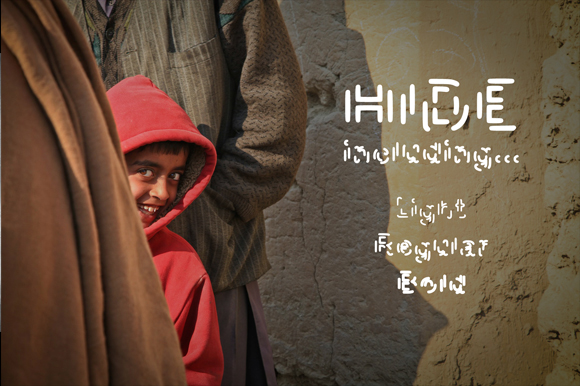
The Quiet Power of Hide: Choosing a Typeface with a Gentle Voice
In an era where visual communication often defaults to bold, loud, and assertive design, there is a growing need for restraint. Professionals and creatives alike are rediscovering the value of quiet confidence—the idea that what you choose to say softly can be just as impactful as a shout. This is where the concept of a “shy” typeface becomes relevant. Hide is a font designed precisely for this purpose. It is a typeface that carries an understated personality, offering a distinct voice without demanding attention. Available in three carefully considered weights—Light, Regular, and Bold—Hide provides a versatile toolkit for projects where empathy, subtlety, and clarity matter more than disruption. Understanding what makes Hide distinct and how it fits into the broader landscape of type choices can help you decide if it is the right voice for your next project.
What Defines a Shy Typographic Voice?
To appreciate what Hide brings to your layout, it helps to understand what we mean by a “shy” font. Most typefaces are designed with a specific intention. Some are built for maximum legibility at tiny sizes, others for commanding presence on a billboard. A shy typeface, by contrast, prioritizes a delicate balance between personality and discretion. It does not attempt to dominate the page or the screen. Instead, it invites the reader in, creating an intimate reading experience.
Hide achieves this through its proportions and stroke details. Unlike geometric sans-serifs that feel perfectly engineered, or robust serifs that carry centuries of authority, Hide has a human, slightly vulnerable quality. Its curves are gentle, and its overall texture is soft without being muddy. This makes it particularly suited for contexts that require a personal touch—long-form reading on a tablet, personal journaling apps, or branding for wellness and creative services. The shyness is not a flaw; it is a deliberate design philosophy that positions the reader’s comfort above the designer’s ego.
Exploring the Three Weights of Hide
The availability of three weights is a critical factor in evaluating Hide for real-world use. A typeface that only offers one weight can be limiting, but Hide’s Light, Regular, and Bold are designed to work together as a cohesive system while each serving a distinct functional role.
Hide Light: The Whisper
The Light weight is the most reserved of the trio. It is ideal for applications where you want text to be present but nearly imperceptible as a design element. Think of photo captions in a portfolio, fine print in a layout, or the body text of a poetry collection where the words need space to breathe. The tradeoff here is straightforward: Light weights work best at moderate to large sizes and in contexts with sufficient contrast. On a white screen with small text, it can become challenging to read. Therefore, for users considering Hide Light for an app interface or a website’s main body copy, it is wise to test it thoroughly or reserve it for decorative or supporting roles where its delicate nature shines.
Hide Regular: The Soft-Spoken Conversation
This is where Hide feels most natural and balanced. The Regular weight carries the core personality of the typeface—approachable, unhurried, and sincere. It is an excellent choice for long-form editorial content, personal correspondence, or any medium where you want the reader to feel as though they are being spoken to, not lectured. Compared to other standard reading fonts, Hide Regular offers more emotional texture. While a font like Helvetica or Inter strives for neutrality, Hide Regular adds a layer of warmth that can make a digital reading experience feel more human. The tradeoff is a slight reduction in the sterile, “clean” look that some corporate environments prefer. If your project requires an utterly objective tone, a more neutral sans-serif might be a better fit. Hide Regular is the right choice when your content has a voice that deserves to be heard with empathy.
Hide Bold: The Gentle Assertion
Bold weights are usually reserved for shouting. Hide Bold, however, is a polite but firm assertion. It does not abandon the shy character of the family; it simply gains enough confidence to lead a subheading or a pull quote. This is a crucial distinction. Many typeface families feel like different fonts as you move from Light to Bold. Hide maintains its consistent personality across the spectrum. The Bold weight is perfect for creating gentle hierarchy without jarring the reader. It works beautifully in interface navigation, chapter headings, or branding applications where you need presence without aggression. The limitation is that it may still lack the punch required for high-impact advertising or large signage. For those scenarios, a more assertive display font would be necessary.
When Hide Stands Out Among Alternatives
Making an informed choice often comes down to comparing Hide against the common alternatives you might be evaluating. The key is to match the typographic voice to the emotional tone of the project.
Scenario A: The Long-Form Reading Experience. If you are designing an ebook application or a blog dedicated to reflective writing, your main priority is sustaining reader comfort over time. A classic serif like Garamond offers tradition and authority, but it can feel detached from a modern personal essay. A humanist sans-serif like Frutiger is clear and friendly, but it can lack character. Hide Regular sits in a sweet spot: it is modern enough to feel current, yet personable enough to feel like a conversation. For readers aged 20 to 50 who are accustomed to clean digital interfaces, Hide provides a familiar yet emotionally resonant experience that encourages them to stay with the text.
Scenario B: Branding for Professional Services. Consider a consultant, therapist, or boutique lawyer who wants to convey competence without being intimidating. A standard corporate font like Arial or Helvetica might feel too cold and impersonal. A traditional serif like Times New Roman feels outdated. Hide, particularly in Regular or Light, signals sophistication and thoughtfulness. It suggests that the professional values clarity and connection over brute authority. This is a powerful differentiator in fields where trust is the primary currency.
Scenario C: Creative Portfolios and Artistic Platforms. For a photographer, illustrator, or writer, the font surrounding their work should complement, not compete. Display fonts can be too distracting. Neutral sans-serifs can feel generic. Hide Light for captions and Hide Regular for body text creates a quiet, elegant frame that lets the creative work remain the focal point. The shyness of the font becomes a virtue, allowing the art to speak louder than the text.
Evaluating the Tradeoffs and Limitations
No typeface is a perfect fit for every situation, and removing Hide from its ideal context can reveal its limitations. It is important to be honest about where this font may struggle so you can plan accordingly.
- Strength: Hide excels in creating emotional resonance and intimacy. It is excellent for storytelling, personal branding, and interfaces designed for prolonged engagement.
- Strength: The family offers good versatility for its voice. You can build a recognizable visual hierarchy using the three weights without switching to a different typeface entirely.
- Tradeoff: Hide may not perform well in competitive, high-noise environments. If your design needs to stand out on a crowded shelf or a busy dashboard, you will likely need a bolder, more extroverted font for primary headlines.
- Tradeoff: Its shy character can be mistaken for weakness if paired incorrectly. A careless layout or poor color contrast can make the Light weight disappear. Success with Hide often depends on thoughtful spacing, generous sizing, and appropriate background support.
- Limitation: Unlike some super-families that offer dozens of weights or optical sizes, Hide stays focused on its three core expressions. For projects that require extreme typographic flexibility—like a massive publication system—you may need to supplement it with another typeface for specific roles.
Making an Informed Decision for Your Project
When you are comparing options, the decision to adopt Hide should rest on a clear understanding of your project’s primary goal. Ask yourself: what is the emotional tone I want my audience to feel? If the answer involves words like safe, understood, cared for, or inspired, then Hide is a strong candidate. It supports content that aims to build connection rather than force reaction.
On the other hand, if your goal is to alert, energize, or dominate a visual space, you will likely need a typeface with more inherent kinetic energy. Hide is not designed to compete with loud display fonts for attention in a frantic marketing campaign. Respecting this boundary is what makes it a professional tool rather than a universal solution.
Testing is the final step. Place Hide into your actual layout. Read a long passage in the Regular weight. See how the Light weight feels for a caption against your preferred background color. Does it make you want to slow down and read? Does it support the message without drawing attention to itself? For many users—particularly those who are building brands around wellness, creativity, personal growth, or thoughtful service—the answer will be a resounding yes. In a noisy digital world, giving your audience the gift of a quiet, confident, and shy voice can be the most impactful design decision you make.