BD Telegraph: Evaluating the Heavy Uppercase Titling Typeface for Logotype Creation
When selecting a typeface for titling and logotype work, the sheer number of options can feel overwhelming. Among the many choices available to designers, art directors, and brand strategists, BD Telegraph stands out as a distinct voice. Released in 2011 by Lopetz Büro Destruct through typedifferent.com, this typeface takes a heavy uppercase approach with an architectural sensibility. It is not merely a set of letters; it is a design system that asks to be used with intention. Understanding its strengths, limitations, and ideal contexts allows you to evaluate whether it fits your specific project needs, or whether another option may serve you better.
What Makes BD Telegraph Distinct
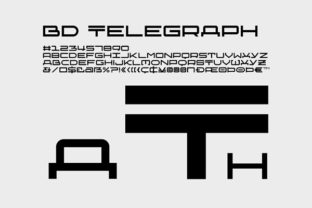
BD Telegraph is designed primarily for titling. Its uppercase-only character set is deliberately heavy, with each letterform constructed with a structural, almost industrial logic. The weight is consistent and imposing, giving the typeface a commanding presence at large sizes. This is not a font for body text or paragraphs. It is a visual marker, meant to be seen from a distance and to convey authority, stability, or permanence.
The architectural approach referenced in its description is not accidental. The letterforms appear as though they could be rendered in concrete, steel, or carved stone. There is a geometric precision to the shapes, yet each character retains a subtle individuality that prevents it from feeling coldly mechanical. The uppercase 'A' may have a flattened apex, the 'R' a distinctive leg curve, and the 'E' a balanced set of arms that feel neither too wide nor too narrow. These small decisions give BD Telegraph a personality that is both serious and approachable.
Another key trait is the range of alternatives available within the typeface. Rather than offering a single static set of characters, BD Telegraph includes multiple versions of some letters. This feature allows you to choose among different forms, enabling customization and avoiding repetition in headlines, logos, or other display settings. For a designer working on a logotype, this flexibility can be invaluable. It allows the same typeface to feel slightly different across applications, while maintaining brand consistency.
Comparing BD Telegraph with Similar Titling Options
When you place BD Telegraph alongside other heavy uppercase titling typefaces, several differences become apparent. Many heavy sans-serif titling fonts rely on uniform stroke widths and perfectly rounded terminals. BD Telegraph, by contrast, introduces slight angularity and structural detailing that gives it a more constructed feel. The terminals are not always soft; some cuts are sharp, and the junctions between strokes often have a deliberate, almost engineered quality.
Compared to more minimalist heavy uppercase fonts, BD Telegraph offers more character variation. Some titling fonts aim for near-identical letter widths to create a uniform block of text. BD Telegraph does not follow that path. Its characters have distinct proportions. The 'S' may curve differently than expected, and the 'M' might feature angled verticals rather than parallel ones. This makes the typeface less predictable, which can be either a strength or a limitation depending on your goal.
For projects that require absolute uniformity and neutrality, a more geometrically consistent typeface may be a better fit. For brands or campaigns that need to communicate durability, heritage, or a bespoke quality, BD Telegraph offers a distinctive voice that many alternatives lack.
Strengths of BD Telegraph in Practice
One of the primary strengths of BD Telegraph is its performance at large sizes. On posters, billboards, environmental signage, or hero headlines, the heavy weight ensures legibility and impact. Even from a distance, the letterforms hold their shape. The uppercase layout also contributes to a sense of formality and importance, which can elevate a project's perceived authority.
Another practical advantage is the alternative character sets. If you are creating a logotype for a company that will be used across multiple touchpoints, having access to different versions of key letters means you can tweak the logo for different contexts without redesigning the entire mark. For example, you might use a more angular 'R' for the primary logo and a rounder version for sub-brand applications. This versatility is not always available in titling fonts, and it gives BD Telegraph an edge for branding work.
The architectural quality also lends itself well to industries such as construction, engineering, finance, law, or any field where stability and trust are central. A real estate development firm, for instance, could use BD Telegraph in its marketing materials to suggest solidity and permanence. A legal practice might use it for a logo that communicates dependability. The typeface does not feel trendy or ephemeral; it projects a sense of lasting value.
Limitations and Tradeoffs to Consider
No typeface works in every context, and BD Telegraph has clear boundaries. Its uppercase-only design means it is unsuitable for any application requiring mixed case or lowercase text. If your project involves extensive written content, you will need a complementary body typeface. The heavy weight also means that at smaller sizes, some of the finer details can become muddy or lose definition. The typeface is optimized for display, not for small print.
Another tradeoff is the strong personality of the letterforms. While this is a strength when you want the typeface to be noticed, it can become a limitation if you need a neutral or background voice. BD Telegraph demands attention. In a layout where multiple elements compete for the viewer's eye, this typeface can dominate. That may be exactly what you want, but it is worth evaluating whether the project calls for a more restrained option.
The alternative character sets, while valuable, also introduce a decision-making burden. With multiple versions of certain letters, you must choose which combination works best. This requires thoughtful experimentation and an understanding of how each variation affects the overall tone. For a designer who prefers a set-it-and-forget-it approach, a simpler titling font with fewer variables may be more efficient.
Best-Fit Situations for BD Telegraph
BD Telegraph is an excellent choice when the project goals include creating a strong, memorable visual mark that suggests structure and durability. It works well for:
- Logotype creation for brands that want to project stability, trust, and a bespoke identity.
- Poster and billboard headlines where maximum impact at scale is required.
- Environmental signage in architectural or institutional settings, where the typeface's constructed feel can reinforce the built environment.
- Packaging for premium or industrial products that benefit from a heavy, authoritative presence.
- Editorial covers or section titles where a single, heavy uppercase treatment sets the tone.
If your project involves any of these contexts, BD Telegraph deserves serious consideration. Its combination of weight, architectural detailing, and character alternatives provides a toolkit that many other typefaces do not offer.
When Another Option May Be Better
There are also scenarios where BD Telegraph may not be the ideal fit. If your brand requires a softer, more approachable voice, or if the target audience is younger and expects a more playful or informal aesthetic, a heavy uppercase architectural typeface may feel too rigid. Similarly, if your design system relies heavily on body text and you need a typeface that can work across all sizes and weights, BD Telegraph's display-only nature will require you to invest in a secondary font.
Projects with strict budget constraints may also face considerations. BD Telegraph is a commercial typeface, and while the investment is reasonable for a professional tool, it may not be the most cost-effective option if you only need a few letters or a one-off headline. In those cases, a more affordable or free alternative with a similar heavy uppercase style could serve the purpose, though you may sacrifice the character alternatives and architectural nuance.
If your workflow relies on rapid prototyping or if you are designing for digital-first platforms where loading speed and file size matter, the multiple weights and alternative characters of BD Telegraph may add complexity that a simpler, single-weight titling font would avoid.
Decision Factors to Guide Your Choice
To determine whether BD Telegraph is the right typeface for your current project, consider these factors:
- Scale: Will the typeface be used primarily at large sizes? If yes, BD Telegraph performs well. If small sizes are important, look for a complementary font.
- Tone: Is the brand's personality serious, structural, or authoritative? If so, BD Telegraph aligns. If warmth or whimsy is needed, explore other options.
- Flexibility: Do you need multiple versions of letters for a custom logotype? The alternatives in BD Telegraph offer real value. If you prefer a single, consistent set, a simpler typeface may save time.
- Visual weight: Does the design need a heavy, commanding element? BD Telegraph delivers this without hesitation. If a lighter touch is required, a regular or light weight font may be better.
- Complementary pairing: Are you prepared to select a second typeface for body text and smaller details? BD Telegraph works best as part of a two-font system, not as a standalone solution.
Practical Examples of BD Telegraph in Use
Imagine a design firm working on branding for a new urban development project. The developer wants to communicate strength, permanence, and modern architecture. The design team selects BD Telegraph for the logotype. They experiment with the alternative character forms, choosing a more angular 'A' and 'R' to mirror the sharp lines of the buildings. On the website hero, the company name appears in bold uppercase, setting a confident tone. On construction site hoardings, the same typeface is printed at large scale, maintaining readability and impact.
Now consider a small craft brewery that wants to project a rustic, handmade image. The owner considers BD Telegraph but decides it feels too industrial and cold for their brand story. Instead, they choose a custom hand-drawn typeface or a softer serif that better reflects the warmth of their product. In this case, the architectural quality of BD Telegraph was not a wrong choice, but it was not the best fit for the intended emotional response.
Another scenario: a museum launches an exhibition on 20th-century industrial design. The marketing team uses BD Telegraph for the exhibition title on posters, banners, and the catalog cover. The typeface's structural DNA echoes the subject matter, creating a cohesive visual narrative. Visitors immediately connect the typography with the theme before reading a single word of text.
Making an Informed Decision
BD Telegraph is not a typeface for every project, nor does it claim to be. Its strengths lie in specific contexts where heavy uppercase titling with architectural character is needed. By understanding what makes it distinct, where it excels, and where its limitations appear, you can evaluate it against your project's unique requirements. Whether you ultimately choose BD Telegraph or another option, the key is matching the typeface's personality to the message and audience you intend to reach. The best design decisions come from knowing both the tools and the context in which they will be used.