Scripton: A Dual-Weight Brush Typeface for Dynamic Design
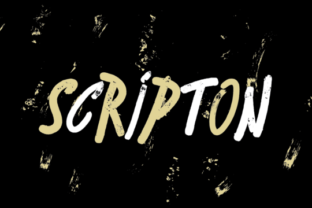
When you open a font file, you expect consistency. Every glyph in the same weight looks the same, sits at the same visual heft, and behaves predictably. That predictability is useful, but it can also feel flat, especially when you work with brush typefaces that are meant to evoke energy, movement, and a human touch. Scripton breaks that expectation in a way that benefits anyone who works with display typography, headlines, or short-form paragraphs. It is a slanted, urban brush typeface that combines two different glyph weights within a single font file, giving your titles and paragraphs a specific rhythm and contrast that would otherwise require manual swapping or multiple font versions. That single-file dual-weight approach is not just a technical curiosity. It solves a practical problem: how to create visual tension and textural variety without extra steps, extra files, or extra decisions.
What Scripton Offers That Other Brush Typefaces Do Not
Most brush fonts deliver one weight per file. If you want contrast between thick and thin, you either pick a single weight with built-in stroke variation or you load two separate fonts and switch between them. Scripton does something different. Within a single font file, you get two distinct glyph weights. Some characters are noticeably heavier, others lighter, and they alternate across your text in a way that feels organic rather than random. Because the typeface is slanted and urban, the dual-weight feature amplifies its street-level energy. The heavier glyphs anchor your words, while the lighter ones add bounce and flow. The result is a rhythm that draws the eye along the line without the reader needing to understand why. That rhythm is especially valuable in titles, where you want instant impact, and in short paragraphs, where you want the text to feel alive rather than mechanical.
Practical Benefits for Professionals and Creators
If you design social media graphics, presentation slides, flyers, posters, or website headers, Scripton can save you time directly. You no longer need to open a second font family or tweak stroke weights manually to create contrast. The font does that for you. For a marketer preparing a campaign, that means fewer design decisions per asset. For a freelancer juggling multiple client projects, it means faster turnaround on headlines that still look handcrafted. For a small business owner creating their own promotional materials, it removes one more technical hurdle between an idea and a finished piece. The dual-weight feature also reduces the risk of mismatch. When you rely on two separate fonts for weight contrast, there is always a chance they will not harmonise in x-height, slant angle, or overall feel. Scripton eliminates that risk because both weights live inside the same file, designed to work together from the start.
Creating Rhythm and Contrast Without Extra Effort
The specific rhythm that Scripton creates comes from the alternating weight pattern. In a typical brush script, evenness can feel safe but unremarkable. Scripton’s built-in contrast introduces a visual pulse that makes your text feel more like a hand-painted sign than a digital output. For bloggers and educators who use titles to structure content, this rhythm helps guide the reader through the material. A heavy glyph at the start of a word draws attention; a lighter glyph later in the same word keeps the eye moving. That natural pacing is difficult to achieve with a uniform font. You would normally need to adjust kerning, tracking, or manually replace certain letters. Scripton does it automatically, which lets you focus on your message rather than micro-adjusting your type.
Where Scripton Shines Most: Titles, Headlines, and Short Paragraphs
Scripton is not built for long body text. No urban brush typeface is. But for the contexts where it belongs, it performs exceptionally well. Titles and headlines are its natural habitat. The slanted angle combined with the dual-weight contrast creates a forward momentum that suits action-oriented language. If you are writing a call-to-action, a product name, a workshop title, or a social media post header, Scripton adds a layer of attitude that standard fonts struggle to match. Short paragraphs of one to three lines also benefit. A tagline under a logo, a quote on a poster, a subhead in a presentation—these are the spots where Scripton’s rhythm adds value without compromising readability. The contrast between heavier and lighter glyphs ensures that even a short block of text has texture, which keeps the viewer engaged longer.
Realistic Use Cases Across Different Roles
Consider a creator building a brand for an urban clothing line. A uniform brush font might feel too polished. Scripton’s alternating weights mirror the irregularities of hand-painted signs, which fits a streetwear aesthetic naturally. For a publisher laying out the cover of a zine or a music album, the dual-weight feature can echo the raw energy of the content inside. For an educator designing a workshop flyer, the slanted brush style signals creativity and informality, making the event feel approachable. For a marketer launching a product aimed at younger audiences, Scripton can help the headline stand out in a crowded feed without requiring a full design overhaul. In each case, the value is not just visual. It is practical: you get more expressive output with fewer technical steps.
Efficiency Gains for Designers and Non-Designers Alike
One of the underappreciated benefits of Scripton’s single-file dual-weight system is simplicity. When you manage a font library, every additional family increases cognitive load. Which weight did I use last time? Do I have both files installed? Will the two weights align properly? With Scripton, those questions disappear. One file, one family, one set of decisions. For freelancers and small business owners who are not professional designers, this matters a lot. It reduces the chance of errors and speeds up the workflow from concept to final output. For professional designers, the benefit is different but equally real: you can experiment faster. Rough drafts and comps come together quicker when you do not have to load and test two separate fonts to see if the contrast works. Scripton lets you test the rhythm immediately, which supports a more iterative creative process.
Who Benefits Most from Scripton’s Approach
While Scripton can work for many people, certain groups will find its combination of urban style, slanted energy, and dual-weight contrast especially useful. Marketers who produce regular social content will appreciate the consistency across posts. Bloggers who use visual headers to break up text will gain a distinctive look without constant font switching. Creators building a personal brand around bold, expressive visuals will find Scripton aligns with their aesthetic without requiring custom lettering. Publishers working on limited-run projects like posters, zines, or event programmes will value the handcrafted feel that comes automatically. Freelancers and hobbyists who want professional-looking results without spending hours on typography will benefit the most because Scripton does part of the creative work for them.
When to Compare Options or Consider Limitations
No typeface works for every situation, and Scripton is no exception. Its slanted urban brush style is expressive, which means it may not suit formal, corporate, or minimalist contexts where restraint is needed. If your project requires neutrality, readability at small sizes, or long-form body text, Scripton is not the right choice. The dual-weight feature is designed for display use, not extended reading. Additionally, because the weight alternates, you have less control over the exact weight of each individual glyph. If you need perfect uniformity for a specific design, a standard single-weight font will serve you better. Scripton works best when you embrace its built-in rhythm rather than fight it. For users who want consistency but are open to organic variation, the trade-off is well worth the visual payoff.
How Scripton Supports Creative Communication and Decision-Making
Choosing a typeface is a design decision, but it is also a communication decision. Every font carries subtext. Scripton’s slanted, urban, dual-weight character suggests movement, authenticity, and a certain street-level directness. When you use it, you are telling your audience that the content is dynamic and intentional. This can simplify your creative choices because the font itself communicates energy, reducing the need for additional visual elements like heavy borders or multiple colours. For entrepreneurs and educators who want their materials to stand out without overdesigning them, Scripton offers a shortcut to a polished, expressive look. It does not replace good content, but it frames that content in a way that invites closer attention.
Final Thoughts on Scripton’s Practical Value
Scripton is not trying to be everything to everyone. It is a specialised tool for a specific purpose, and within that purpose, it performs remarkably well. The combination of two glyph weights within a single font file is a thoughtful design choice that solves a real problem: how to add rhythm and contrast to headlines and short paragraphs without extra work. For professionals, creators, marketers, bloggers, educators, freelancers, hobbyists, publishers, and small business owners, that translates into faster workflows, more expressive output, and fewer technical headaches. If your projects call for a slanted urban brush typeface with personality and built-in contrast, Scripton is worth trying. It gives you the texture of hand-lettered words with the reliability of a digital file. That is a balance worth considering for anyone who puts words where people will see them.