Norman: A Bold Brush Font for Standout Design
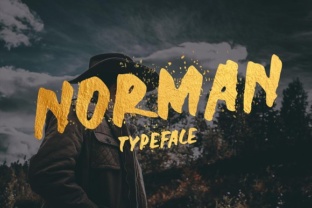
Every now and then a typeface comes along that doesn't just sit quietly on the page. Norman is one of those fonts. It is a handwritten brush font, and from the first glance, you can tell it was made to be noticed. The strokes are bold. The letters carry a sense of movement and intention. It does not try to be neutral. It tries to say something. And for designers, brand owners, and anyone creating visual work that needs to connect with people quickly, that quality is hard to find.
Norman draws from the energy of hand-painted signage and the raw immediacy of brush lettering. But it is not a relic of the past. It is built for modern workflows, digital platforms, and real-world production. Whether you are sketching out a logo concept, printing a run of T‑shirts, or building a visual identity for a new brand, Norman offers a voice that is both human and confident.
What Makes Norman Stand Out as a Brush Font
The brush font category is crowded. Many options feel either too refined or too messy. Norman finds a balance. Its letterforms are expressive without losing readability. The thick and thin transitions are controlled, which means the font works at larger display sizes but also holds up in shorter text blocks where clarity matters.
Another detail worth noting is the texture. Norman carries the subtle grain and pressure variation of a real brush. That tactile quality is difficult to replicate with digital tools, but when it works, it gives your design a handmade feel that people instinctively trust. In a world of perfect vector shapes, a little imperfection goes a long way.
Norman also includes a full set of uppercase and lowercase characters, punctuation, and multilingual support. That might sound basic, but for a brush font with this level of personality, it is surprisingly practical. You are not limited to a handful of letters. You can write full sentences, taglines, or product names without the font breaking character.
Why Norman Works for Apparel and Branding Projects
Apparel design lives and dies on impact. A shirt graphic has a fraction of a second to catch someone's eye. Norman delivers that impact. Its bold weight reads from a distance, and the brush strokes give it a natural sense of motion. Whether you are screen printing a single word on a chest logo or building a full back design, the font holds its shape across different fabric textures and print techniques.
Branding is a different challenge. A brand needs consistency, but it also needs personality. Norman can serve as a hero typeface for brands that want to feel approachable, artisanal, or energetic. Coffee shops, streetwear labels, craft breweries, creative studios, and small-batch product lines all benefit from a font that looks like it was made by hand. It tells customers that there is a human behind the business.
That said, Norman is not a font you want to use for body copy or long paragraphs. Its strength is in headlines, logos, short phrases, and accent typography. Use it where you want the words to feel like a statement, not an explanation.
Creative Applications Across Different Formats
The versatility of Norman goes beyond apparel and branding. Here are a few specific applications where the font can elevate your work without feeling forced.
- Posters and event flyers. Norman works well for concert posters, festival announcements, or workshop promos. Pair it with a clean sans-serif for dates and details, and the contrast will do the heavy lifting.
- Social media graphics. Instagram stories, LinkedIn banners, and TikTok thumbnails all benefit from text that pops. Norman gives you that hand-drawn look without needing to hire a lettering artist for every post.
- Packaging design. Small-batch products, handmade goods, and natural brands can use Norman on labels and boxes. It communicates authenticity and care.
- Merchandise beyond clothing. Tote bags, hats, mugs, stickers, and phone cases all work well with bold brush lettering. Norman keeps your message consistent across product lines.
- Signage and murals. If you are designing for physical spaces, Norman can be scaled up without losing its texture. Wall quotes, window decals, and menu boards become more inviting with a handwritten touch.
Adapting Norman for Different Audiences and Platforms
One font does not fit every audience, but Norman comes closer than most brush fonts because of its balance between boldness and legibility. The key is to adjust how you use it based on who you are talking to and where they will see it.
For a younger, trend-conscious audience, let Norman be the loudest element. Use it on its own with plenty of negative space. Let the brush strokes feel spontaneous. Streetwear and music brands often benefit from this approach. The font becomes part of the attitude.
For a more professional or creative audience, such as design agencies or boutique studios, pair Norman with a structured serif or a clean sans-serif. Use it for the main headline or the logo mark, but keep the rest of the layout minimal. This signals confidence and craftsmanship without shouting.
For ecommerce and online stores, Norman works well in hero banners and product titles, especially for brands that sell handmade or artisanal goods. It adds warmth to an otherwise digital experience. Just make sure the text is large enough to read on mobile screens. Brush fonts can lose definition at small sizes, so keep Norman at 24 points or larger for digital use.
Practical Tips for Pairing Norman with Other Typefaces
Pairing a bold brush font like Norman requires thought. The goal is contrast, not competition. Here are a few approaches that consistently work.
- Sans-serif companions. Fonts like Montserrat, Open Sans, or Work Sans provide a clean counterpoint to Norman's texture. Use the sans-serif for subheadings, navigation, and body copy.
- Serif companions. If you want a more refined or editorial feel, pair Norman with a serif like Playfair Display or Garamond. This combination works well for branding that needs to feel both handcrafted and established.
- All caps with Norman. Norman in all caps can be powerful, but be selective. Use all caps for short words or single lines. Longer all-caps settings can become harder to read because the brush strokes stack up.
- Color strategy. Norman is already visually busy, so keep your color palette simple. One accent color for the Norman text and a neutral for everything else. Let the font shape the personality, not the palette.
How to Keep Your Designs Clear and Effective with Norman
Bold fonts can overwhelm a layout if you are not careful. Here are practical guidelines to keep your work organized and audience-friendly when using Norman.
- Watch your tracking. Norman has natural spacing built into the glyphs, but depending on the letters, you may need to adjust tracking slightly. Avoid crowding. Give each letter room to breathe.
- Limit your word count. Norman is not a paragraph font. Use it for headlines, calls to action, brand names, or short phrases. If you have more than five or six words, let another font carry the load.
- Test on different backgrounds. Brush fonts can get lost on busy textures or photographs. Use a solid or slightly muted background behind Norman text to preserve readability.
- Respect the brand voice. Norman has a casual, energetic feel. It works best for brands and projects that want to communicate authenticity, creativity, or approachability. If your brand is formal or corporate, use Norman sparingly or choose a different font altogether.
- Stay consistent. Once you choose Norman for a project, stick with it across all touchpoints. Repetition builds recognition. Using the same font in your logo, social media, and packaging creates a cohesive experience.
Real-World Project Ideas Using Norman
If you are looking for a reason to try Norman, here are a few project concepts that align naturally with its strengths.
- A limited-edition apparel drop. Design a small collection of T‑shirts and hoodies with single-word statements or short brand slogans in Norman. Keep the artwork simple. Let the font be the graphic.
- A coffee shop menu board. Use Norman for the drink categories and featured items. Pair it with a simple sans-serif for prices and descriptions. The handwritten feel matches the casual coffee shop atmosphere.
- A personal brand logo. Freelancers, coaches, and creative professionals can use Norman for their name or initials in a logo. It adds personality without looking unprofessional.
- A poster series for a local event. Concert series, art walks, or community workshops can use Norman as the headline font across multiple posters. The consistency builds recognition from event to event.
- A product label for handmade goods. Soap, candles, or packaged foods benefit from a font that looks handcrafted. Norman on a simple label tells customers that the product was made with care.
Each of these projects benefits from the same quality: Norman communicates effort. It does not look like a default system font. It looks like someone picked up a brush and made a deliberate choice. That is hard to fake, and it is even harder to ignore.
Norman is not a subtle font. It is not meant to be. It is meant to be seen, felt, and remembered. If you are working on apparel, branding, or any project that needs a human touch with real presence, give Norman a try. Start with one word. See how it changes the energy of your layout. Chances are, you will keep coming back to it.