Evaluating the Eslava Family: A Geometric Display Typeface for Purposeful Design
When selecting a typeface for a project, the decision often hinges on how well the font's personality aligns with the intended message. The Eslava Family, designed by Pablo Balcells for Graviton Font Foundry in 2012, offers a distinctive option in the display typeface category. With its geometric angular construction and six available styles, Eslava presents a particular set of capabilities and limitations worth examining closely. This article evaluates the Eslava Family to help you determine whether it suits your specific design goals, while also considering where alternative typefaces might serve you better.
What Is the Eslava Family?
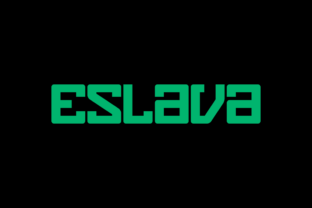
The Eslava Family is a display typeface built on geometric principles with a markedly angular aesthetic. Unlike many geometric fonts that rely on circular curves and clean arcs, Eslava introduces sharp angles and segmented forms that give it a distinctive, almost architectural character. Released through Graviton Font Foundry, the family comprises six styles, offering enough variation for thoughtful typographic hierarchy without becoming an unwieldy system.
Pablo Balcells designed Eslava specifically for display use, meaning it is intended for larger sizes such as headlines, posters, branding elements, and other prominent typographic applications. The angular geometric look is not incidental but central to its identity. Every letterform reflects a deliberate departure from purely rounded geometry, resulting in a typeface that feels both modern and slightly unconventional.
The six styles within the family allow for some flexibility. You can work with lighter and bolder weights, and possibly italic or condensed variants depending on the specific release. This range provides enough options to create contrast within a layout while maintaining visual consistency across different elements.
Why Consider the Eslava Family?
Several factors may draw a designer or project owner toward the Eslava Family. Understanding these motivations helps clarify whether this typeface aligns with your needs.
Distinctive visual character. The angular geometric forms of Eslava stand apart from more common geometric fonts like Futura or Century Gothic. If your project requires a typeface that communicates precision, structure, or a slightly edgy modernity, Eslava offers a unique voice. The sharp angles can convey confidence and deliberate design thinking.
Architectural and structural resonance. Because of its segmented, angular construction, Eslava pairs naturally with projects related to architecture, engineering, technology, or contemporary art. The letterforms resemble structural frameworks or faceted surfaces, making them visually coherent with geometric branding or industrial themes.
Compact family with practical range. With six styles, the Eslava Family is neither too large to manage nor too small to be useful. You can establish a clear typographic hierarchy without needing to mix multiple unrelated typefaces. This simplicity can be an advantage when working within tight brand guidelines or when you want to minimize decision fatigue during the design process.
Designed by an experienced type designer. Pablo Balcells has a track record of producing thoughtful typefaces, and Eslava benefits from his attention to detail. The spacing, proportion, and consistency across characters reflect professional craftsmanship, which is an important consideration when evaluating any typeface for serious use.
Benefits of Using the Eslava Family
When Eslava is a good fit for a project, it delivers several clear benefits.
Strong brand distinctiveness. Because Eslava is not as widely used as more generic geometric fonts, it can help a brand or publication stand out. The angular forms are memorable and create a strong visual signature. In crowded visual environments, a unique typeface can be a valuable differentiator.
Effective for large-format display. At headline sizes, the geometric angular details of Eslava become quite apparent and visually engaging. The letterforms hold up well at large scales, making them suitable for posters, billboards, hero headers, and environmental graphics. The angular cuts and facets add visual interest that simpler fonts lack at those sizes.
Cohesive visual system. The six styles allow you to maintain a consistent look across different levels of content. You can use a bold weight for primary headlines, a lighter weight for secondary text, and perhaps a condensed version for subheadings or captions. This internal coherence simplifies the typographic system and strengthens the overall visual identity.
Works well in monochromatic applications. Eslava's geometric angular forms tend to read clearly in black and white or single-color settings. The shapes are defined enough that they do not rely on color or texture to communicate their character. This makes the font a practical choice for print materials, signage, or digital interfaces where color may be limited.
Tradeoffs and Considerations
No typeface is universally appropriate, and Eslava comes with its own set of tradeoffs that you should weigh carefully.
Limited readability at small sizes. As a display typeface, Eslava is not optimized for body text. At smaller sizes, the angular cuts and geometric precision can make letterforms harder to distinguish, especially in dense paragraphs. If your project requires extended reading text—such as articles, reports, or book chapters—Eslava will likely not perform well. You would need to pair it with a more readable text typeface, which adds complexity to your typographic system.
Angular forms may feel cold or rigid. The same angularity that gives Eslava its distinctive character can also make it feel less approachable. In contexts where warmth, friendliness, or organic fluidity is desired, Eslava may communicate the wrong tone. A softer or more rounded geometric font might better suit projects targeting a broader or more casual audience.
Six styles may be limiting for complex projects. While six styles are enough for many projects, large-scale brand systems or editorial designs often require more variety. If you need multiple weights, widths, or optical sizes, Eslava may not provide sufficient range. You may need to supplement it with other typefaces, which can create consistency challenges.
Relatively niche aesthetic. The angular geometric look of Eslava is not universally appealing. Some clients or audiences may find it too unconventional or harsh. Before committing to this typeface, consider whether its visual language aligns with the preferences and expectations of your target audience. In conservative industries like law, finance, or healthcare, Eslava may feel out of place.
Situations Where Eslava Is a Strong Fit
Based on its characteristics, the Eslava Family works well in several specific scenarios.
Architecture and design branding. If you are developing a visual identity for an architecture firm, design studio, or construction company, Eslava's structural feel can reinforce the brand's focus on precision and built form. The angular letterforms echo building structures, blueprints, and geometric design principles.
Technology and innovation contexts. For tech startups, product launches, or innovation-focused publications, Eslava's modern and slightly futuristic look can signal forward thinking. The sharp angles suggest precision engineering and digital-native design.
Poster and event design. Concerts, exhibitions, conferences, and cultural events often benefit from bold, distinctive typography. Eslava can anchor a poster layout with strong visual presence. At large sizes, the angular details become a feature that draws attention.
Limited-edition packaging or merchandise. When you want to create a sense of deliberate design, such as on premium packaging or limited-run products, Eslava can communicate that care and intention. The typeface feels crafted rather than generic, which aligns with artisanal or curated brand positioning.
Alternative Typefaces Worth Considering
Depending on your project's specific needs, you might find that other typefaces offer better alignment. Here are some alternatives to evaluate alongside Eslava.
Futura remains a reliable geometric sans-serif with a much larger family and better readability at smaller sizes. If you need a geometric look but with more versatility and wider recognition, Futura is a strong candidate. It lacks Eslava's angular edge but offers superior range and legibility.
Brandon Grotesque provides a geometric structure with softer curves and a more approachable tone. If Eslava feels too rigid for your audience, Brandon Grotesque offers a friendlier geometric alternative that still feels modern and clean.
FF DIN offers a functional, industrial aesthetic that shares some of Eslava's structural sensibility but with more straightforward geometry and better performance in text sizes. For projects requiring both display and text usage, FF DIN may be more practical.
League Gothic is a condensed geometric sans-serif that provides strong visual impact at display sizes. It is less angular than Eslava but offers a similar sense of boldness and compression. It also has the advantage of being open-source.
Proxima Nova bridges geometric and humanist styling with a large family and excellent screen readability. If you need a font that works across both display and body text contexts, Proxima Nova offers more flexibility than Eslava.
Practical Decision-Making Insights
When evaluating whether the Eslava Family is right for your project, consider the following practical steps.
Test at actual usage sizes. Download a trial version or use the font in a mockup at the sizes you plan to use. Display fonts behave differently at different scales, and Eslava's angular details need to be tested in context. A headline that looks striking at 72 points may feel overwhelming or illegible at 24 points.
Pair it with a complementary text font. If your project requires body text, plan for a pairing from the outset. Look for a neutral sans-serif or serif that contrasts well with Eslava without competing for attention. Testing pairings early in the process prevents inconsistencies later.
Evaluate audience expectations. Consider who will be reading your materials. If your audience is accustomed to more conventional typography, Eslava's angular forms may feel jarring. If your audience is design-savvy or expects innovative visuals, Eslava may enhance credibility and engagement.
Check licensing and availability. Graviton Font Foundry may have specific licensing terms for desktop, web, and app use. Ensure that the license covers your intended usage before committing to the typeface. This is a practical consideration that can affect project budgets and timelines.
Compare with alternatives side by side. Set up a visual comparison between Eslava and two or three alternative typefaces in your actual layout. This direct comparison often reveals differences in spacing, tone, and readability that are less obvious when evaluating fonts individually.
Determining Whether Eslava Aligns with Your Goals
Ultimately, the decision to use the Eslava Family comes down to alignment between the typeface's strengths and your project's requirements. If you need a distinctive, angular geometric display typeface for large-format use in a context where its structural character reinforces the message, Eslava is a strong candidate. It offers professional design, a cohesive family, and a unique visual voice that can differentiate your work.
However, if your project requires readability at small sizes, a warmer tone, or a more extensive type family, you will likely need to look beyond Eslava. It is not a universal solution, and applying it in the wrong context can undermine the effectiveness of your design.
By testing the font in your specific use case, pairing it thoughtfully, and comparing it with relevant alternatives, you can make an informed decision that serves both your design goals and your audience's needs. The Eslava Family is a purposeful tool for the right project, and understanding its boundaries is just as important as appreciating its strengths.