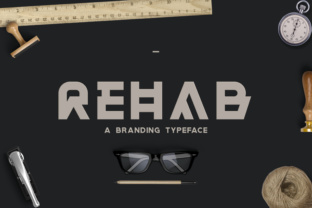
Rehab Font: Branding That Demands Attention
Some fonts blend in. Others stop you mid-scroll, make you double-take, or linger in memory long after you have looked away. Rehab belongs to the second group. Designed specifically for branding that needs to leave a mark, this typeface does not whisper—it states its presence with deliberate clarity. Whether you are building a visual identity from scratch or refreshing an existing one, Rehab offers something rare: personality that translates across formats without losing its edge.
What Makes Rehab Distinct
Rehab is not a neutral workhorse font. It carries attitude, structure, and a certain grounded confidence that works well when you need your message to feel intentional. Its letterforms balance bold weight with readable proportions, which means it can anchor a logo, headline, or campaign visual without requiring excessive styling support. The design leans into contemporary tastes while avoiding trends that date quickly. That balance makes it useful for entrepreneurs, designers, and marketers who want their branding to feel current but not disposable.
The name itself suggests renewal and transformation—themes that align naturally with businesses, products, or services centered on change, growth, or restoration. But you do not need a literal connection to those ideas to make Rehab work. Its visual character speaks to resilience and directness, qualities that suit almost any brand with something clear to say.
Creative Possibilities Across Platforms
One of the most practical strengths of Rehab is its versatility across different media. It holds its own in print, on screens, and in motion. Here are several ways to apply it effectively depending on your project and audience.
Logo and Wordmark Design
When you set a brand name in Rehab, the result feels monolithic. There is no need to add decorative extras—the letterforms already carry enough visual interest. Small businesses, freelancers, and creators often struggle with logos that look undercooked or overworked. Rehab solves that by giving you a solid foundation. Pair it with a simple icon or let it stand alone. Either approach works because the typeface itself becomes the mark.
For a fitness or wellness brand, the weight of Rehab communicates strength and stability. For a creative studio, it signals confidence without arrogance. The key is to let the font do the heavy lifting rather than crowding it with competing elements.
Packaging and Product Labels
Packaging is one of the most tactile branding touchpoints, and Rehab translates well into that space. Its bold forms remain legible at small sizes, which matters when you need ingredient lists, taglines, or product names to be readable at a glance. Consider using Rehab for primary display text on labels, then pairing it with a lighter secondary font for supporting copy. That contrast keeps the package organized and directs attention where it matters most.
Artisans, small-batch producers, and hobbyists turning side projects into businesses will find Rehab especially useful. It adds a professional finish without requiring expensive design software or specialized skills. A well-chosen typeface can elevate a product more than any filter or graphic effect.
Web and App Interfaces
Digital branding demands clarity, especially on mobile screens where space is limited. Rehab works well for headings, navigation labels, and hero section text. Its sturdy forms reduce ambiguity, which helps users understand your interface faster. Bloggers, educators, and publishers who run content sites can use Rehab to create visual hierarchy without relying on heavy imagery. A bold headline in Rehab paired with a clean body font creates a reading experience that feels both modern and trustworthy.
Avoid using Rehab for long paragraphs or dense body copy. Its weight is better suited to short, impactful statements. Reserve it for moments where you want to anchor the reader's attention.
Adapting Rehab for Different Audiences
Different audiences respond to different visual cues. The same typeface can read completely differently depending on context, color, spacing, and supporting elements. Understanding how to adjust Rehab for your specific audience helps you get more value from it.
Younger Demographics and Lifestyle Brands
If your target audience skews toward Gen Z or younger millennials, consider pairing Rehab with vibrant color palettes and asymmetrical layouts. The font's solid structure grounds experimental compositions, preventing them from feeling chaotic. Streetwear brands, music projects, and content creators building a visual identity around authenticity often benefit from this combination. Rehab adds weight to playful or unconventional ideas, making them feel intentional rather than random.
Professional Services and Established Businesses
For consultants, coaches, or agencies, Rehab conveys reliability. Use it in monochrome or muted tones, with generous letter spacing for a more refined feel. The same font that reads as bold and rebellious in a streetwear context becomes restrained and authoritative when surrounded by white space and minimal design. That flexibility is one of the most practical aspects of Rehab—it does not lock you into a single tone.
Nonprofits and Mission-Driven Organizations
Organizations focused on social impact, community building, or environmental causes can use Rehab to communicate urgency and sincerity. Its directness cuts through the noise of competing messages. A bold headline in Rehab paired with documentary-style photography creates a visual language that feels honest and unfiltered. That approach resonates with audiences who value transparency over polish.
Practical Project Ideas to Explore
Sometimes the best way to understand a typeface is to start using it. Here are a few project ideas to help you explore what Rehab can do for your work.
- Brand identity refresh: Replace your current headline font with Rehab and reassess your visual hierarchy. Let it become the anchor that everything else supports.
- One-page landing site: Build a single-page site using Rehab for all headings and calls to action. Focus on clarity and direct messaging without decorative distractions.
- Social media template set: Create a group of quote cards, announcement posts, and story templates using Rehab. Consistent typography across platforms builds recognition over time.
- Product packaging line: Design a small run of labels or tags for a product you already make or sell. Test how Rehab works at different sizes and on different materials.
- Poster or print series: Use Rehab for large-format text. Experiment with scale, color, and layout to see how its proportions behave at size.
Keeping Your Results Clear and Consistent
Good typography is not just about choosing a font—it is about how you use it. Here are a few guidelines to keep your work with Rehab effective and audience-friendly.
- Limit your palette. Use Rehab for display purposes only. Pair it with one or two neutral typefaces for body copy and supporting text. Too many typefaces compete for attention and dilute impact.
- Watch your spacing. Rehab benefits from generous letter spacing in all-caps settings. For lowercase or title case, standard spacing works well. Adjust tracking based on the specific word or phrase you are setting.
- Consider contrast. Rehab is bold, so it needs breathing room. Avoid placing it directly against busy backgrounds or competing visual elements. White space is your ally.
- Test at scale. What looks balanced on a screen may feel heavy on a billboard or cramped on a business card. Preview your designs at the actual sizes they will appear.
- Stay consistent. Once you commit to Rehab as a brand typeface, use it consistently across touchpoints. Familiarity builds trust, and inconsistent typography undermines the identity you are trying to build.
Why Rehab Works for Creators and Small Teams
Freelancers, small business owners, and independent creators often work with limited resources. You may not have a dedicated designer on staff or the budget for custom typefaces. Rehab fills that gap by offering professional-level impact without requiring extensive design expertise. It gives you a starting point that already looks finished. That efficiency matters when you are juggling multiple roles and need to make every piece of content count.
Educators and publishers can also benefit from Rehab's clarity. Course materials, workshop slides, and digital publications need to communicate ideas without visual friction. A strong heading in Rehab frames the content that follows, helping learners and readers orient themselves quickly. It adds a layer of polish that signals care and attention to detail.
A Typeface That Works With You
Rehab does not demand that you build an entire identity around it. It adapts to your existing approach while elevating the parts that matter most. That flexibility is what makes it useful for such a wide range of projects and audiences. Whether you are launching a new brand, overhauling an old one, or experimenting with a personal project, Rehab gives you a tool that is both distinctive and dependable.
The best fonts are the ones that disappear into the message they carry. Rehab has enough presence to attract attention, but enough restraint to let your content lead. That rare combination is exactly what branding needs to leave a lasting impression.