Armadura Family: A Geometric Display Typeface Built for Impact
Typography is often the silent narrator of design. It shapes tone, guides perception, and establishes authority before a single word is read. Among the vast landscape of typefaces, few achieve the balance of raw structure and expressive character quite like the Armadura Family. Designed by Pablo Balcells for Graviton Font Foundry in 2012, this display typeface brings a distinct geometric angularity to projects that demand attention. Whether you are building a brand identity, designing a poster, or crafting a digital interface, understanding the nuances of this family can elevate your typographic choices.
The Origins of Armadura: Geometry Meets Personality
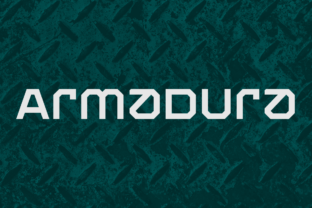
Pablo Balcells set out to create a typeface that felt both architectural and alive. The result is a display face where every letterform feels constructed rather than drawn. The angular strokes, sharp terminals, and consistent geometric logic give Armadura Family a mechanical precision that still manages to feel human. Released in 2012 through Graviton Font Foundry, it quickly found a home in projects where standard sans-serifs felt too soft and serifs too traditional.
The name itself — Armadura, meaning "armor" in several Romance languages — hints at the protective, fortified quality of the letterforms. Each glyph stands with a kind of structural integrity, as if built from metal plates or faceted stone. This is not a typeface that whispers. It announces itself with clarity and purpose.
Six Styles, One Cohesive Voice
The Armadura Family comprises six distinct styles, each offering a different weight or expression while maintaining the core geometric angular DNA. This range gives designers flexibility without sacrificing consistency. Here is what you can expect:
- Armadura Light — A lighter touch that still retains the angular structure. Suitable for larger sizes where a subtle, airy feel is needed.
- Armadura Regular — The workhorse of the family. Balanced, readable, and confident at display sizes.
- Armadura Bold — Heavier strokes with more pronounced angular cuts. Ideal for headlines and short bursts of text that need to command space.
- Armadura Black — Maximum weight without losing the geometric precision. Best used sparingly for maximum impact.
- Armadura Italic — An oblique interpretation that adds motion while preserving the structural logic. Not a simple slanted version but a thoughtful adaptation.
- Armadura Bold Italic — Combines the weight of Bold with the dynamism of Italic. Useful for emphasis in headline stacks or layered typography.
Each style works independently, but the real power emerges when you combine them within a single composition. The family allows for hierarchy without visual fragmentation, which is a practical advantage in both print and screen environments.
Geometric Angularity: What Sets Armadura Apart
Many geometric typefaces lean toward circles, uniform curves, and predictable repetition. The Armadura Family takes a different path. Instead of soft curves, you find sharp angles, faceted joins, and a deliberate avoidance of predictable roundness. The lowercase 'a' and 'e' feature angular bowls. The uppercase 'A' lacks a crossbar in some cuts, emphasizing an open, airy structure. The 'R' and 'K' have sharp, extended legs that create dynamic negative space.
This angular quality makes Armadura especially effective when you want to convey:
- Modernity — The sharp edges feel current and forward-looking.
- Strength — The structural form suggests durability and resilience.
- Precision — The geometric logic implies careful calculation and intent.
- Distinction — It avoids the familiarity of more common geometric sans-serifs like Futura or Gotham.
Yet despite its angular nature, the typeface remains highly legible at display sizes. The counters are open, the spacing is generous, and the x-height is well-proportioned. This is not a novelty face. It is a functional tool with a strong point of view.
Where Armadura Fits in Modern Workflows
Designers today work across media — print, web, mobile, environmental graphics, and motion. The Armadura Family adapts well to these contexts, though it requires thoughtful application. Here are several scenarios where it excels:
Brand Identity and Logos
Armadura's angular character makes it a strong candidate for logos in industries like technology, architecture, automotive, gaming, and fashion. The typeface conveys innovation and solidity. A brand using Armadura in its wordmark signals that it values precision and forward-thinking design. The Light and Regular weights work well for sub-brands or taglines, while Bold and Black anchor the primary mark.
Poster and Editorial Design
In large-scale print, the sharp terminals and geometric rhythm create striking typographic compositions. Posters for events, conferences, or cultural institutions benefit from the typeface's ability to hold its own alongside bold imagery. The Italic styles add movement to otherwise static layouts. In editorial design, Armadura is best reserved for headlines, pull quotes, and section openers rather than body copy, where its angularity could fatigue the reader over long passages.
Digital Interfaces and Web Design
On screen, the Armadura Family performs well at larger sizes. It works beautifully for hero headings, navigation labels, and call-to-action buttons. Because the letterforms are distinct, they remain legible even on lower-resolution displays. However, the family is not intended for long-form body text on the web. Its strength lies in moments of emphasis — the title, the headline, the single word that carries meaning.
Environmental Graphics and Signage
Architectural signage, wayfinding systems, and exhibition graphics benefit from Armadura's structural clarity. The angular forms echo built environments, making the typeface feel at home on walls, panels, and dimensional signage. The heavier weights ensure visibility from a distance, while the geometric consistency helps maintain a cohesive system across multiple touchpoints.
Motion and Video
In motion graphics, the sharp angles of Armadura create dynamic kinetic typography. Letters can be animated to reveal their faceted construction, or the angular forms can drive transitions and pacing. The Italic styles add a natural sense of direction and flow when text moves across the frame.
Practical Considerations When Choosing Armadura
Before committing to the Armadura Family for a project, there are several factors worth evaluating:
Pairing with Other Typefaces
Armadura works best when paired with a neutral, readable companion for body text. A clean sans-serif like Open Sans, Source Sans, or even a simple serif like Merriweather can provide contrast. The key is to let Armadura lead the visual hierarchy while the secondary typeface supports readability. Avoid pairing Armadura with another strongly geometric face — the competition creates visual noise.
Size and Scale
This is a display typeface, meaning it shines at sizes above 24 points. Below that threshold, the angular details may become less distinct, and the overall impression can feel cramped. If you need a typeface for small text or extended reading, look elsewhere. For headlines, titles, and short statements, Armadura delivers exceptional impact.
Language and Character Support
The family includes standard Latin character coverage, making it suitable for most Western European languages. If your project requires extended Cyrillic, Greek, or non-Latin scripts, verify the character set before committing. Graviton Font Foundry typically provides detailed specimen sheets and glyph lists on their website.
Licensing and Usage
As with any commercial typeface, licensing matters. The Armadura Family is available through Graviton Font Foundry and selected resellers. Depending on your project — personal, commercial, web, or app — you will need the appropriate license. Web licenses typically include webfont formats (WOFF and WOFF2), while desktop licenses cover print and static digital mockups. Always confirm usage rights before deploying the typeface in production.
Observations on the Design Community's Reception
Since its release in 2012, Armadura has garnered a loyal following among designers who value typographic personality. It appears in branding for startups, cultural posters, music festival identities, and architectural publications. The typeface has aged well because it never chased trends. Its geometric angularity was distinctive a decade ago and remains fresh today — a testament to the strength of the original concept.
Some designers note that Armadura can be polarizing. The sharp forms are not universally appealing, and in the wrong context, they can feel aggressive or cold. This is a valid observation. The typeface rewards intentional use. When applied thoughtfully, it brings energy and structure. When used indiscriminately, it can overwhelm a layout. Understanding when and where to deploy each of the six styles is part of mastering the family.
Final Thoughts on the Armadura Family
The Armadura Family by Pablo Balcells and Graviton Font Foundry occupies a valuable space in modern typography. It is geometric without being sterile, angular without being harsh, and distinctive without being gimmicky. For designers seeking a display typeface that communicates strength, precision, and contemporary character, Armadura offers a well-crafted toolkit of six styles that work together seamlessly.
Whether you are developing a brand identity, designing a poster, or building a digital interface, the Armadura Family gives you the structural vocabulary to speak with clarity and confidence. The key is to respect its display nature, pair it wisely, and let its architectural beauty do the heavy lifting. In a world of endless typographic options, Armadura remains a standout choice for projects that demand a voice with edge and intention.