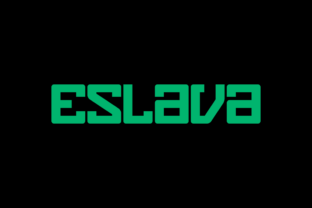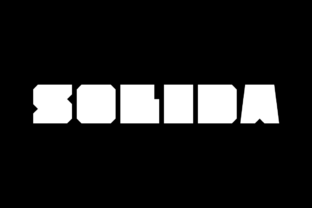
Solida Family: Geometric Precision and Angular Character in Display Typography
In the crowded landscape of type design, certain typefaces manage to carve out a distinct identity through a clear design philosophy and consistent execution. Solida Family is one such typeface system, created by Pablo Balcells for Graviton Font Foundry in 2012. This display typeface series stands out through its unapologetic geometric angular look, bringing a sense of structural rigor and visual assertiveness to any project where it is applied. Its ten distinct styles provide a surprisingly versatile toolkit for designers, brand builders, and content creators who need typography that communicates clarity, strength, and modernity without sacrificing readability at display sizes.
The Design DNA Behind Solida Family
Understanding what makes Solida Family distinctive requires a closer look at its construction and the philosophy behind it. Pablo Balcells approached this typeface with a clear intention: to build letterforms that feel architecturally sound while remaining legible and expressive in display settings. The geometric angular look is achieved through precise manipulation of straight lines, sharp vertices, and carefully considered intersections. Unlike many geometric typefaces that lean toward circular forms, Solida embraces angularity as a core aesthetic principle. This results in characters that feel both contemporary and grounded, as if each letter was drafted using a straightedge and compass rather than traced from existing forms.
The ten styles within Solida Family are not arbitrary variations. They represent a systematic exploration of weight, proportion, and optical adjustment. From lighter weights that retain the sharpness of the design to heavier versions where the angularity becomes even more pronounced, each style serves a specific purpose. The typeface avoids decorative excess, choosing instead to let the geometry of each letter speak for itself. This restraint makes Solida Family particularly effective in contexts where the typography must carry meaning without competing for attention through ornamentation.
Geometric Angularity as a Visual Language
The angular quality of Solida Family is not merely a stylistic choice; it functions as a visual language that conveys specific attributes to the viewer. Sharp angles tend to communicate precision, decisiveness, and forward-thinking sensibilities. When applied to branding or editorial design, this typeface family can subtly reinforce messages about innovation, architecture, technology, and modernism. The geometric angular look avoids the softness of humanist typefaces and the coldness of purely mechanical forms, striking a balance that feels intentional and crafted. Designers working in fields such as tech branding, architectural publishing, fashion editorial, and product packaging have found Solida Family to be a reliable tool for establishing a tone of confident modernity.
Exploring the Ten Styles and Their Practical Use
Having ten styles within a single typeface family offers more than just flexibility; it provides a coherent system for visual hierarchy across various media. Solida Family includes a range of weights that allow designers to move from delicate to commanding while maintaining the same geometric DNA. This consistency is crucial when building brand systems or designing multi-page publications where typographic harmony is expected.
- Light and Regular styles work well for headlines in editorial layouts where a refined angular presence is desired without overwhelming the page. These weights excel at medium to large sizes where the sharp terminals become readable details.
- Semibold and Bold weights bring forward the aggressive side of the geometric angular look, ideal for impactful headlines, posters, and digital banners. The increased stroke width makes the angularity more visible, transforming each letterform into a geometric statement.
- Extra Bold and Black styles push the typeface to its extreme, where counters tighten and angles become dominant. These are best reserved for short display applications such as magazine covers, logotypes, and environmental graphics where maximum presence is required.
- Italic variants within the family introduce a dynamic slant that adds movement while preserving the angular construction. This is not a simple oblique; the italics are optically adjusted to maintain the integrity of the geometric forms even when inclined.
The existence of these ten styles means that a designer can rely on Solida Family alone to build a complete typographic system for a project. From subtle subheadings in light weight to commanding hero text in black weight, the family covers a spectrum of tonal possibilities while retaining a unified visual identity. This reduces the need to mix typefaces, which can sometimes introduce conflicting visual languages.
Real-World Applications Across Industries
Observing how Solida Family is used in practice reveals the typeface's adaptability and the thoughtfulness of its design. In the technology sector, startups and established companies alike have used this typeface for landing pages and product interfaces where the geometric angular look aligns with innovation narratives. The angular letterforms evoke precision engineering, making them suitable for brands in robotics, software, and hardware.
Architecture and interior design firms have also adopted Solida Family for their marketing materials and presentations. The typeface's structural quality echoes the built environment, creating a direct visual connection between the typography and the work being showcased. For firms that emphasize modernism and clean lines, Solida Family becomes an extension of their design philosophy.
Cultural institutions and museums have found value in this typeface family for exhibition signage and catalogs. The typeface's ability to remain legible at large sizes while maintaining aesthetic interest makes it suitable for wayfinding systems and exhibition titles. The angular look provides a sense of contemporary relevance that aligns with modern art and design exhibitions.
Technical Considerations for Designers
When working with Solida Family, understanding its technical characteristics can help designers make better decisions regarding sizing, spacing, and pairing. The geometric angular construction means that letter spacing may require manual adjustment at certain sizes, particularly in heavier weights where the sharp forms can visually crowd together. Optical compensation is sometimes necessary to ensure that the angular terminals do not create uneven visual rhythm in extended text settings.
Solida Family performs optimally at display sizes, typically above 24 points, where the fine details of its construction become visible and impactful. At smaller sizes, particularly in body text applications, the angularity can create visual noise that reduces readability. This makes the typeface best suited for headlines, titles, pull quotes, and other display-oriented roles rather than long-form reading. Designers who need a companion typeface for body text should look for neutral, humanist, or serif options that contrast with the sharpness of Solida Family while maintaining visual harmony.
Pairing Suggestions for Solida Family
Effective typographic design often involves pairing display typefaces with text typefaces that complement their character. For Solida Family, pairing with a clean sans-serif that has softer geometric forms can create a productive tension between angular and rounded elements. Alternatively, pairing with a traditional serif typeface can establish a contrast between modern geometric angular look and classical proportions, which can be effective in editorial and publishing contexts.
The key is to ensure that the secondary typeface does not compete with Solida Family but rather supports it. Neutral typefaces with low contrast and moderate proportions tend to work well, allowing Solida Family to retain its role as the visual anchor. In brand systems, this pairing strategy helps maintain hierarchy and guides the reader's eye through different levels of information.
Observations on the Evolution of Geometric Typefaces
Solida Family belongs to a broader tradition of geometric typefaces that have periodic resurgences in popularity. From the early twentieth-century experiments with geometric sans-serifs to contemporary revivals and innovations, the geometric approach to type design continues to offer fresh possibilities. What distinguishes Solida Family is its deliberate embrace of angularity at a time when many geometric typefaces were moving toward softer, more rounded forms. This design choice gives the typeface a distinctive voice in the current typographic landscape.
Pablo Balcells's work for Graviton Font Foundry reflects an understanding that modern audiences respond to authenticity and intentionality in design. Solida Family does not attempt to be everything to everyone; it is unapologetically angular and display-oriented, and this focus is precisely what makes it valuable for specific applications. Designers who choose this typeface are making a conscious decision about the tone and message of their work.
The Role of Solida Family in Contemporary Branding
In branding, typography often carries as much weight as color and imagery in establishing brand personality. Solida Family offers brands a way to communicate precision, forward thinking, and structural integrity. For startups looking to convey innovation, or for established companies refreshing their visual identity toward a more modern direction, this typeface family provides a strong foundation.
The ten styles allow brands to maintain consistency across touchpoints, from digital interfaces to print collateral to environmental signage. A brand using Solida Family can rely on the typeface's distinct character to create recognition without needing additional visual elements. This efficiency is valuable in an era where brand systems must be both distinctive and manageable across diverse media.
Considerations for Educators and Researchers
For educators teaching typography and design history, Solida Family serves as an excellent case study in how geometric typefaces can be reimagined for contemporary use. Analyzing the typeface's construction, its relationship to historical geometric forms, and its application in modern branding can provide students with insights into the ongoing evolution of type design. The ten styles also offer a practical example of how a typeface family can be structured to provide both range and coherence.
Researchers studying typographic trends and their impact on visual communication can observe how Solida Family has been adopted across industries. Its consistent use in technology branding and architectural publishing suggests a correlation between angular geometric forms and perceptions of modernity and precision. Such observations can inform broader discussions about the role of typeface selection in brand perception and user experience.
Practical Workflow Integration
For professionals integrating Solida Family into their workflow, the typeface is available in standard formats compatible with major design software and web platforms. Its OpenType features may include stylistic alternates, ligatures, and extended language support, depending on the specific version. Checking the feature set provided by Graviton Font Foundry can help designers take full advantage of the typeface's capabilities.
When using Solida Family on the web, attention to font loading and rendering is important to ensure that the angular details are preserved across different browsers and operating systems. Testing at various sizes and background colors can reveal how the typeface performs in different environments. The geometric angular look tends to be most effective on high-resolution displays where its sharp lines can be rendered with precision.
Looking Ahead: The Continued Relevance of Solida Family
As typography continues to evolve with changing technology and aesthetic preferences, typefaces like Solida Family that are built on strong design principles tend to maintain their relevance. The geometric angular look is not a passing trend but a recurring theme in design history that adapts to contemporary sensibilities. Solida Family represents a thoughtful contribution to this tradition, offering a tool that is both of its time and enduring.
For designers building new projects, or for those revisiting existing work in need of typographic refreshment, Solida Family remains a compelling choice. Its ten styles, its clear design philosophy, and its proven track record across industries make it a reliable option for those seeking typography with character and substance. The typeface does not rely on novelty but on the strength of its geometric angular construction, which continues to resonate with audiences seeking clarity, precision, and purpose in visual communication.
Whether applied to a tech startup's website, an architecture firm's portfolio, or a cultural institution's exhibition materials, Solida Family brings a level of intentionality that elevates the content it frames. For those who appreciate the craft of type design and its impact on how messages are received, this typeface family from Graviton Font Foundry stands as a noteworthy achievement that rewards continued exploration and use.
The angular geometry of Solida Family serves as a reminder that good type design is not about following trends but about creating forms that communicate with integrity and purpose. For anyone working in visual communication, understanding and applying such typefaces adds depth and professionalism to their work.