Draconian: Evaluating a Vintage American Display Font
When a project calls for a typeface that commands attention, the choice often narrows to display fonts designed for impact rather than extended reading. Draconian enters this space as a vintage American-style font with a deliberately tough character. Whether you are designing posters, merchandise, apparel fashion, branding materials, or any project needing an expressive typeface, understanding what Draconian offers—and where it falls short—can guide your decision. This article provides a balanced evaluation to help you determine if Draconian aligns with your specific needs.
What Is Draconian?
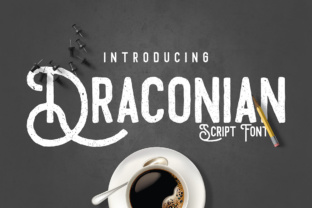
Draconian is a display typeface rooted in vintage American lettering traditions. Its design evokes the rugged, bold aesthetic associated with old Western signage, industrial labels, and mid-century graphic arts. The font is characterized by strong vertical strokes, sharp serifs or slab-like terminals, and a compact, assertive presence. Unlike many modern, neutral fonts, Draconian carries a personality that is immediately recognizable: it feels sturdy, unapologetic, and slightly weathered, even in its digital form.
The term “display font” is crucial here. Draconian is not intended for body text or long-form reading. Its letterforms are optimized for short, impactful messages—headlines, logos, titles, and large-format applications. The vintage American styling means it borrows cues from hand-painted signs and early printing, giving it an authentic, nostalgic texture that modern minimal fonts often lack.
Why Draconian Attracts Designers and Brand Managers
Interest in Draconian typically stems from a need for personality and distinction in visual communication. In a crowded market where many brands default to clean sans-serifs, a font with character can become a differentiator. Several specific reasons draw people to Draconian:
- Expressive strength: Its tough, no-nonsense appearance suits projects that aim to convey durability, tradition, or a rugged edge.
- Vintage authenticity: The font captures a distinctly American aesthetic that resonates with audiences seeking heritage or retro cues.
- Versatility in display contexts: From event posters to clothing labels, Draconian maintains legibility at large sizes while adding a personal touch.
- Uniqueness: Compared to ubiquitous display fonts like Impact or Cooper Black, Draconian offers a less common look that can help a design stand out without being gimmicky.
However, these benefits come with tradeoffs. The font’s strong personality can overwhelm delicate layouts or clash with certain brand identities. Evaluating these tradeoffs is essential before committing to the typeface.
Benefits
- High impact at large sizes: Draconian’s bold strokes and clear shapes ensure readability even when scaled up for billboards, banners, or environmental graphics. The vintage imperfections—such as slight irregularities in stroke weight—add visual interest without harming legibility.
- Memorable branding potential: For businesses in sectors like craft beer, denim apparel, outdoor gear, or diners, Draconian can become a signature element that reinforces brand storytelling. The font’s toughness aligns with values like authenticity, craftsmanship, and resilience.
- Expressive versatility: Although it is rooted in a vintage American style, Draconian can be paired with more neutral fonts to create contrast. For instance, using it for a headline with a clean sans-serif for body copy creates a dynamic tension that many designers find effective.
- Unique aesthetic range: The font is not strictly literal; it offers a stylized take on old lettering. This means it can work for both serious and playful projects, depending on surrounding design elements.
Tradeoffs and Considerations
- Limited legibility at small sizes: When scaled down for tags, footnotes, or small labels, Draconian’s tight letter spacing and heavy strokes can cause letters to blur together. This limits its use in detail-oriented applications without careful size adjustment.
- Strong stylistic bias: Using Draconian inherently injects a vintage, rugged tone into a project. If the goal is a clean, futuristic, or elegant look, this font will likely feel out of place. Designers must ensure the brand’s personality matches the font’s character.
- Potential overuse of a singular look: Because Draconian is so distinctive, employing it too broadly across a project can become monotonous. It often works best as a accent or primary display font rather than a complete typographic system.
- Pairing challenges: Finding complementary typefaces requires thought. Many modern sans-serifs or delicate scripts clash; pairing often works best with neutral serifs or other vintage-style fonts, but the combination must be tested.
Ideal Use Cases for Draconian
Understanding where Draconian excels helps you decide if it fits your project. The following scenarios are strong fits:
- Posters and flyers: Event promotions, especially for music festivals, film screenings, or cultural events with an Americana, western, or retro theme, benefit from Draconian’s bold headlines.
- Merchandise and apparel: T-shirt designs, patches, and hoodies often rely on display fonts that are readable from a distance. Draconian’s tough character works well for clothing brands that emphasize durability, workwear, or vintage style.
- Branding for physical products: Companies making tools, leather goods, or outdoor equipment can use Draconian for logos, labels, and packaging to signal reliability and heritage.
- Signage and environmental graphics: Bar and restaurant interiors, especially those with a rustic or industrial theme, can use Draconian for menu boards, wall quotes, and directional signs.
- Digital headlines with a twist: While primarily a print and display font, Draconian can be used sparingly on websites for hero section titles or call-to-action banners, provided the size is large enough to retain legibility.
When Alternatives May Be Worth Considering
No single font works for every project. Draconian’s specific character means there are clear scenarios where alternatives perform better:
- If your brand tone is modern, minimalist, or high-end: Fonts like Helvetica Neue, Futura, or Gotham offer the clean sophistication that Draconian lacks. These neutral typefaces allow the content to speak without stylistic interference.
- If you need extensive language support or special characters: Some vintage display fonts have limited glyph sets. Check that Draconian covers the diacritics, ligatures, or numeric styles your project requires. If not, a more comprehensive display font such as Bebas Neue might be a better fit.
- If your primary use is small body text: For paragraphs, descriptions, or fine print, a dedicated text face with balanced x-height and comfortable leading is essential. Draconian is not suitable for body copy; pair it with a reliable text font if needed.
- If you require high legibility on screens: Display fonts with extreme contrast or vintage flourishes can suffer on low-resolution screens. For responsive web design, test Draconian at various breakpoints. A robust, screen-optimized display font like Oswald might offer better performance.
- If you are designing for a non-American audience or a global brand: The strong American vintage connotation may not resonate in all cultural contexts. Consider whether the font’s associations align with your target market’s expectations.
Practical Decision-Making Insights
To determine if Draconian aligns with your goals, start by clarifying the function of the text. Display fonts are meant for short, attention-grabbing phrases—if your project relies heavily on long headlines or repeated use of the font, test it in context. A mockup of a poster or website can reveal legibility issues or clashing with other visual elements.
Next, consider the emotional tone. Write down the attributes you want your design to communicate: tough, nostalgic, bold, authentic? If those match Draconian’s profile, you are on the right track. Conversely, if you need a font that feels approachable, elegant, or innovative, look elsewhere.
Licensing and availability matter, too. Verify that Draconian is licensed for your intended use—commercial, web, app, or merchandise. Some vintage-style fonts have restrictive licenses or are only available through certain foundries. Compare pricing and licensing terms with alternative display fonts to ensure cost-effectiveness.
Finally, test pairings. A common mistake is using a strong personality font in isolation. Pair Draconian with a simple serif (like Libre Baskerville) or a clean sans-serif (like Lato) for body text. Use the pair in a mock layout—if the result feels cohesive rather than chaotic, Draconian may be a good choice.
Expectations for Performance
When using Draconian, anticipate that it will dominate the visual hierarchy. It is not a background typeface; it will draw the eye immediately. This can be an asset or a liability. In branding, ensure that the font does not overshadow other elements like logos or imagery. For merchandise, consider how the font interacts with fabric texture or print colors—large, bold letters may require extra spacing to prevent ink bleed on dark materials.
In digital contexts, test the font on different devices. Some vintage display fonts do not render well on older mobile screens due to stroke complexity. Provide fallback fonts in CSS to maintain design integrity.
Conclusion: Is Draconian Right for You?
Draconian is a specialized tool in a designer’s typeface toolbox. Its vintage American style and tough character offer a distinct voice for projects that need expressive, large-format typography. It excels in posters, merchandise, apparel, and branding where heritage and durability are key themes.
However, its limited legibility at small sizes, strong stylistic bias, and pairing challenges mean it is not a universal solution. Before selecting Draconian, compare it against alternatives based on your specific context: brand personality, text function, audience, and medium. If your project calls for an assertive, nostalgic display font that commands attention, Draconian deserves serious consideration. If your needs lean toward subtlety, modernism, or high-volume text, other options may serve you better.
By weighing the benefits and tradeoffs discussed here, you can make an informed decision that supports your design goals while avoiding common pitfalls. When used thoughtfully, Draconian can become a memorable and effective element of your visual communication strategy.