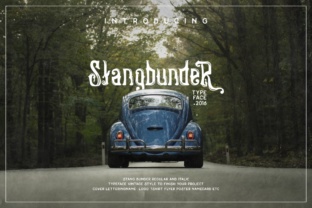
Stangbunder: A Vintage Display Font with Character and Practical Versatility
Typography choices often define the tone of a project before a single word is read. Among the many display typefaces available, Stangbunder has drawn attention for its distinct vintage character and robust design. This typeface offers something beyond mere decoration — it brings a specific mood and utility that can elevate branding, packaging, editorial work, and digital content when used thoughtfully. Understanding what Stangbunder offers, where it excels, and where it may fall short helps designers, marketers, and content creators decide if it belongs in their toolkit.
What Stangbunder Is and Why It Deserves Attention
Stangbunder is a vintage display font inspired by hand-painted signage, mid-century advertising aesthetics, and the rough-hewn lettering found on old storefronts and posters. Unlike many modern display fonts that aim for pristine polish, Stangbunder embraces irregularities, texture, and a slightly worn appearance. This gives it an authentic, lived-in quality that feels deliberate rather than accidental. It is not a revival of a single historical typeface but rather a composite of influences drawn from vernacular lettering traditions — the kind of lettering that was painted by hand rather than cast in metal or set by machine.
What makes Stangbunder worth discussing is not just its visual charm but its practical application. It was designed to function as a display face, meaning it works best at larger sizes for headlines, titles, logos, and short blocks of text where impact matters more than extended readability. The font includes uppercase and lowercase characters, numerals, punctuation, and often several stylistic alternates that allow for customization. Some versions also include multilingual support and ligatures, making it more versatile than many vintage-inspired typefaces that remain limited in character sets.
Authentic Vintage Texture and Imperfection
Stangbunder deliberately avoids smooth, uniform strokes. Instead, its letterforms contain subtle irregularities — uneven edges, slight ink bleed effects, and variations in stroke weight that mimic the look of hand-painted or screen-printed lettering. This texture adds depth and warmth, especially in print applications where digital perfection can feel sterile. The imperfection is controlled enough to remain readable but loose enough to feel organic.
Bold and Robust Letterforms
The font leans toward bold and extra-bold weights, with thick strokes that command attention. Its proportions are condensed in some versions and extended in others, offering flexibility within the same family. The x-height is typically generous, which helps legibility even at smaller display sizes. The letterforms carry a sturdy, grounded presence that works well for authoritative messaging, retro branding, and industrial-themed design.
Stylistic Alternates and Customization Options
One of Stangbunder's stronger features is its inclusion of alternate glyphs. Designers can swap standard letters for variants with different tail lengths, swashes, or decorative flourishes. This allows for custom wordmarks and logotypes without needing to modify the font itself. Some versions also include ligatures that automatically replace certain letter pairs with more stylized combinations, adding to the handcrafted feel.
Branding and Identity Work
Stangbunder excels in branding projects that require a nostalgic or artisanal identity. Coffee roasters, craft breweries, barbershops, bakeries, and independent retailers often seek typefaces that communicate tradition, quality, and human touch. Stangbunder delivers this without looking like a generic vintage font clone. When paired with clean sans-serif or minimalist layouts, it creates contrast that strengthens visual hierarchy. For a small business owner or entrepreneur developing a brand from scratch, this font can serve as the anchor for a cohesive identity system.
Posters, Signage, and Print Collateral
For print applications, Stangbunder's texture becomes an advantage. It reproduces well on uncoated paper stocks, where its rough edges complement the tactile feel of the material. Event posters, merchandise labels, packaging inserts, and menu boards benefit from its bold presence. It also works for signs and banners where legibility at a distance is required, provided the text is kept short and the size is adequate. The font's irregular edges may not suit high-gloss or ultra-smooth finishes, but for matte and textured surfaces, it blends naturally.
Digital and Web Applications
Using Stangbunder on screen requires attention to size and rendering. At large display sizes — above 36 pixels — the font maintains its character without losing clarity. For headings, hero sections, and call-to-action buttons in web design, it adds personality that flat sans-serif faces cannot match. However, at smaller sizes or on low-resolution screens, the texture can blur and become muddy. Designers should test rendering across devices and consider fallback fonts for body text. For digital creators and bloggers, Stangbunder works well for featured headlines and section titles where a vintage accent is appropriate.
Packaging and Product Design
Product packaging often relies on typography to convey brand story within seconds. Stangbunder's vintage aesthetic suits products marketed as handmade, organic, heritage, or small-batch. It appears on labels for craft spirits, artisanal sauces, natural skincare, and specialty foods. The font's bold weight ensures visibility on shelves, while its texture suggests a product made with care rather than mass production. Marketers and product designers looking to differentiate from mainstream competitors may find Stangbunder a reliable choice for evoking authenticity.
Graphic Designers and Art Directors
Professionals who work on branding, packaging, and editorial projects will find Stangbunder a useful addition to their type library. It fills a niche that sits between overly polished vintage revivals and the raw, unpredictable look of actual hand-painted lettering. Designers who value flexibility will appreciate the alternate characters and ligature options that allow customization without additional illustration work.
Small Business Owners and Entrepreneurs
For those building a brand on a limited budget, a distinctive display font can define visual identity without hiring a custom lettering artist. Stangbunder offers a professional look that competitors using free generic fonts cannot replicate. Its versatility across print and digital media makes it a practical investment for businesses that produce their own marketing materials, menus, signage, and social media graphics.
Marketers and Content Creators
Campaigns that rely on storytelling through visual design benefit from typography that supports the narrative. Stangbunder works well for limited-edition product launches, seasonal promotions, and heritage-themed campaigns. Bloggers and publishers covering topics like vintage design, handcrafted goods, or local culture can use the font to reinforce their editorial voice. For social media content, it adds character to quote graphics, announcement posts, and cover images.
Educators and Hobbyists
Typography enthusiasts and design students exploring display faces will appreciate Stangbunder as a study in how imperfection can be systematized. Hobbyists working on personal projects — such as event invites, custom apparel, or home decor — can achieve professional-looking results without extensive design experience. The font's forgiving nature means that even simple layouts gain visual interest.
Limitations and Considerations to Keep in Mind
No typeface is universally suitable, and Stangbunder has constraints worth acknowledging. Its texture and irregular edges reduce legibility at small sizes, so it should not be used for body text or long passages. On low-resolution screens or when printed on glossy coated paper, the rough details may appear less intentional and more distracting. Designers working in highly corporate or conservative industries may find the font too informal for their needs. Additionally, the stylistic alternates and ligatures, while useful, require some familiarity with OpenType features to access fully — casual users may need to learn how their design software handles these options.
Budget is another factor. Stangbunder is typically a paid font, and while it is reasonably priced compared to custom lettering, it is not free. For professionals who will use it across multiple projects, the cost is justified by the quality and versatility. For one-off projects, a rental license or subscription model may be more practical if available.
Practical Recommendations for Getting the Most Out of Stangbunder
To use Stangbunder effectively, start by pairing it with a neutral, clean sans-serif typeface for body text and secondary information. This creates contrast and prevents the design from feeling cluttered. Use the font at sizes of 36 points or larger for print and 48 pixels or larger for web. Experiment with the stylistic alternates to create a custom look for logos and headings, but avoid using too many variations within a single piece, which can reduce consistency.
Test the font on the final medium before committing. Print a sample on your intended paper stock, and view it on the screens your audience will use. If the texture appears muddy, consider adjusting the rendering settings or using a lighter weight if available. For digital use, consider implementing web font loading strategies that ensure the font renders reliably across browsers and devices.
Stangbunder works best when it is allowed to be the focal point. Avoid surrounding it with competing decorative elements. Give it space — generous margins, ample line height, and simple backgrounds let the letterforms speak. In layouts with photography, choose images that complement rather than compete with the vintage tone.
Evaluating Long-Term Value
Stangbunder holds its value as a design resource because it addresses a consistent need in commercial and creative work: the desire for authentic, character-driven typography. Trends in vintage and retro design have persisted across decades, and fonts like Stangbunder that capture a genuine sense of history without being derivative remain useful across changing styles. Its inclusion of alternates, ligatures, and multilingual support also means it can adapt to evolving project requirements. For designers and businesses that value typographic quality and originality, Stangbunder is a practical, reliable choice that will not feel dated in a few seasons.
At the same time, it is not a Swiss Army knife. Those who need a typeface for long-form reading, ultra-minimalist branding, or hyper-modern digital interfaces should look elsewhere. Knowing when not to use Stangbunder is as important as knowing when it fits perfectly. The best typography decisions come from understanding a font's strengths and limitations, and using it where those strengths align with project goals.
For designers, marketers, entrepreneurs, and creators who work on projects where vintage character, bold presence, and handcrafted texture add genuine value, Stangbunder deserves serious consideration. It delivers what it promises: an expressive display font that brings warmth, history, and personality to the page — without the polish that makes so many digital designs feel interchangeable. Whether you are building a brand from the ground up or adding variety to an existing toolkit, this typeface offers a grounded, reliable option that performs well in the right hands and the right contexts.