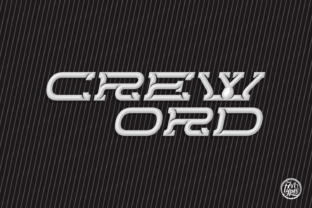
Creword: A Rough-Edged Display Font for Engineering and Automotive Branding
When you are selecting a typeface for a brand or project, the choice often comes down to how well the font communicates the intended mood. Some fonts are clean and minimal. Others are decorative or elegant. But there is a smaller category of typefaces that carry a raw, industrial energy. Creword, a modern display font created by Situjuh Nazara, sits firmly in that territory. With its deliberately rough exterior and mechanical undertones, Creword brings a distinctive voice to branding, signage, and editorial work that needs to feel grounded, tough, or engineered.
This article explores what makes Creword different, where it excels, and when you might consider it over other display font options. Whether you are a designer evaluating typefaces for a client, a business owner exploring branding directions, or a hobbyist experimenting with visual identity, understanding the strengths and tradeoffs of Creword will help you make a more informed choice.
What Is Creword and What Makes It Distinct?
Creword is a display typeface designed by Situjuh Nazara, a type designer whose work often explores expressive, non-conventional forms. The font is characterized by a rough, textured outer edge that gives letters a chipped, worn, or slightly distressed appearance. This is not a subtle effect. The uneven contours are visible at headline sizes and immediately convey a sense of physicality. The letterforms themselves are bold and sturdy, with wide proportions and strong vertical strokes that recall industrial lettering, stencils, or markings found on machinery and equipment.
The roughness in Creword is not random. It follows the contours of each letter in a way that feels intentional and controlled. This distinguishes it from many distressed fonts that apply a uniform grunge effect across all characters. With Creword, the rough edges vary by letter and position, creating a more organic and less repetitive look. The result is a typeface that feels handcrafted yet systematic, which aligns well with themes like engineering, mechanics, and automotive design.
Another distinctive quality is the font's x-height. Creword uses a relatively tall x-height, which improves readability at medium sizes while preserving its rugged character. This makes it more versatile than many display fonts that become illegible when scaled down. You can use Creword for subheadings or short blocks of text, not only for large headlines.
How Creword Compares with Other Display Font Styles
When evaluating Creword, it helps to compare it with broader categories of display fonts rather than specific named alternatives. This approach gives you a framework for deciding when Creword fits and when another style might serve you better.
Creword vs. Clean Geometric Display Fonts
Geometric display fonts like those based on circles, straight lines, and uniform strokes offer a polished, modern, and often minimalist look. They work well for technology companies, luxury brands, and contemporary architecture. Creword takes the opposite approach. It embraces imperfection and texture. If your project requires precision, elegance, or a futuristic feel, a clean geometric font will likely communicate that more effectively. However, if you want to convey authenticity, durability, or a hands-on quality, Creword's rough edges and sturdy forms can create a stronger connection with the audience.
Creword vs. Distressed and Grunge Fonts
Distressed fonts often apply heavy wear, tear, or decay to letterforms. They can look chaotic or aged, which works for retro, punk, or horror themes. Creword is more restrained. Its roughness is focused on the outer edges, leaving the inner shapes relatively clean. This means Creword retains legibility and structure while still offering an industrial feel. If you need a font that reads clearly at a glance but still carries texture, Creword offers a middle ground that many fully distressed fonts cannot match.
Creword vs. Hand-Drawn or Brush Display Fonts
Hand-drawn fonts bring personality and informality, but they can lack consistency across different sizes and applications. Brush fonts often feel energetic but may not suit mechanical or engineering contexts. Creword's systematic roughness gives it a more disciplined character. It feels less like handwriting and more like stamped or machined lettering. For brands in automotive repair, tool manufacturing, or industrial services, Creword can project competence and reliability in a way that hand-drawn fonts cannot.
Strengths and Best-Fit Situations for Creword
Understanding where Creword performs best helps you decide whether it aligns with your project goals. Based on its design characteristics, several use cases stand out.
Engineering and Mechanical Branding
Creword naturally fits brands that operate in engineering, mechanics, and related fields. The rough edges mimic the wear you see on tools, machine parts, and workshop surfaces. A logo set in Creword can suggest a company that values hands-on expertise and practical experience. For example, a brand that sells automotive diagnostic equipment, industrial lubricants, or custom fabrication services could use Creword to signal authenticity and no-nonsense quality.
Automotive and Motorsport Applications
The automotive sector often uses typefaces that evoke speed, strength, or heritage. Creword's bold, sturdy forms work well for car clubs, restoration shops, aftermarket parts brands, or motorsport events. The rough edges can suggest a vintage or well-used aesthetic without resorting to clichés like tire tread patterns or checkered flags. Creword can be paired with clean sans-serif fonts for body text, creating a contrast that highlights the brand's core values of durability and precision.
Product Packaging and Labels
For products that come in metal cans, cardboard boxes, or plastic containers, Creword can add tactile appeal. It works especially well on labels for hardware, tools, adhesives, sealants, and similar goods. The font's readability at medium sizes means it can carry product names and key details without becoming illegible. Combined with a simple color palette of black, white, and metallic tones, Creword helps packaging feel industrial and honest.
Posters, Flyers, and Signage
Because Creword is a display font, it shines at larger sizes. Posters for trade shows, automotive events, or workshop announcements benefit from its commanding presence. The rough edges add visual interest without distracting from the message. For outdoor signage, the bold letterforms remain legible from a distance, and the textured look can hide minor weathering or dirt better than a pristine font would.
Tradeoffs and Limitations to Consider
No font works for every scenario. Creword has limitations that you should weigh alongside its strengths.
Limited Legibility at Small Sizes
Creword's rough edges reduce legibility when the font is used at small sizes. While its tall x-height helps, the uneven contours can make letters appear blurry or distorted below 14 or 16 points. For body text, captions, or legal copy, you will want a complementary sans-serif or serif font. Using Creword exclusively for long paragraphs would strain the reader and undermine the professionalism of your design.
Niche Aesthetic Appeal
The industrial, worn look of Creword is not appropriate for every brand. A financial institution, healthcare provider, or law firm would rarely benefit from a rough display font. In those contexts, a clean, neutral typeface conveys trust and stability more effectively. If your project targets a broad, mainstream audience, Creword may feel too specific or aggressive. You need to assess whether the font's personality aligns with your audience's expectations.
Potential for Overuse in Certain Industries
Because Creword fits engineering and automotive themes so well, there is a risk that it becomes predictable within those fields. If every competitor in a given niche uses a similar distressed or industrial font, your brand may blend in rather than stand out. Using Creword thoughtfully, combined with distinctive colors, photography, or layout choices, helps avoid this pitfall. The font is a tool, not a complete identity.
Limited Language Support
Depending on the specific version of Creword you purchase or license, language support may be limited to Latin-based scripts. For projects that require Cyrillic, Greek, or other character sets, you should check the font's coverage before committing. Situjuh Nazara's fonts often include extended Latin characters, but verifying this for your needs is important.
When Creword May Be the Right Choice
Creword is a strong candidate when your project meets several of the following criteria:
- The brand or message revolves around engineering, mechanics, automotive, tools, or industrial services.
- You want to convey authenticity, durability, hands-on expertise, or a workshop culture.
- The font will be used primarily at headline or display sizes, with a complementary font for body text.
- The visual identity tolerates or benefits from a rough, textured look.
- Your audience includes professionals, enthusiasts, or customers who value function over frills.
If most of these conditions apply, Creword deserves a serious look. It offers a distinctive voice that many cleaner typefaces cannot replicate. When paired with a balanced layout and restrained use of other design elements, Creword can anchor a strong, memorable brand identity.
When You May Need Another Option
Conversely, you might pass on Creword if any of the following are true:
- Your project requires a polished, elegant, or minimalist appearance.
- The font needs to be legible at small sizes for extended text or captions.
- You are designing for a conservative industry where unconventional typefaces could harm credibility.
- You need extensive language support beyond Latin scripts.
- Your audience expects a sleek, modern, or futuristic aesthetic rather than a worn, industrial one.
In those situations, explore other display font categories. Clean geometric sans-serifs, refined slab serifs, or neutral grotesques will likely serve your goals better. Always match the font's personality to the emotional tone you want the brand to project.
Practical Examples of Creword in Use
To ground this discussion in real-world scenarios, consider a few hypothetical applications:
Example 1: A custom motorcycle shop. The shop name appears in Creword across the storefront, business cards, and website header. The rough edges echo the patina of vintage bikes and the hands-on nature of the work. Body text on the website uses a clean sans-serif like Open Sans or Montserrat, ensuring readability for service descriptions and contact info.
Example 2: A line of industrial lubricants. Product labels use Creword for the brand name and key product identifiers. A simple black and yellow color scheme reinforces the industrial feel. The font's texture suggests the product is tough and reliable, not cosmetic. Small print for ingredients and warnings uses a legible serif, keeping safety information clear.
Example 3: A poster for an automotive trade show. The event title is set in Creword at 72 points, with subheadings in a bold sans-serif at 36 points. The rough edges of the title draw attention without competing with sponsor logos or photography. The overall composition feels energetic and professional, aligning with the audience's expectations for a technical event.
Making an Informed Decision About Creword
Choosing a typeface is rarely a matter of picking the most attractive option. It involves understanding the message you want to send and the audience you want to reach. Creword offers a specific set of qualities: roughness, strength, mechanical resonance, and authenticity. These qualities are not universal, but they are powerful in the right context.
When you evaluate Creword, think about the overall visual ecosystem of your project. Consider how Creword interacts with other fonts, colors, images, and materials. Test it at different sizes and in different media. Show it to colleagues or clients who represent your target audience. Their reactions will tell you whether the font's personality lands as intended.
Remember that a display font like Creword works best as a supporting actor in a well-designed system. It can carry a headline or a logo, but it should not carry the entire burden of communication. Use it deliberately, and pair it with complementary elements that allow it to shine without overwhelming the design.
Creword by Situjuh Nazara is a thoughtfully crafted tool for designers who need to convey toughness, craftsmanship, and industrial character. By understanding its strengths, limitations, and best-fit scenarios, you can decide whether it belongs in your next project. And if it does not, you will have a clearer sense of what to look for instead. That clarity is what makes the difference between a font choice that merely looks good and one that truly works.