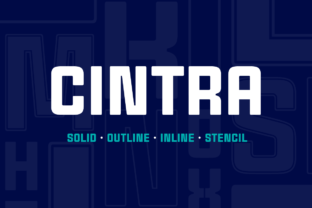
Cintra Family: A Bold Geometric Sans Serif for Branding and Display
When evaluating typefaces for a project, the balance between personality and readability often determines the final choice. The Cintra family, designed by Pablo Balcells in 2014 for Graviton Font Foundry, offers a distinct option within the sans serif category. It is a bold, geometric typeface with subtle rounded angles, which gives it a soft yet structured appearance. With eight styles available, Cintra provides enough flexibility for designers who need consistency without sacrificing character. This article examines what the Cintra family offers, where it excels, and where alternatives may better serve your goals.
Understanding the Cintra Family
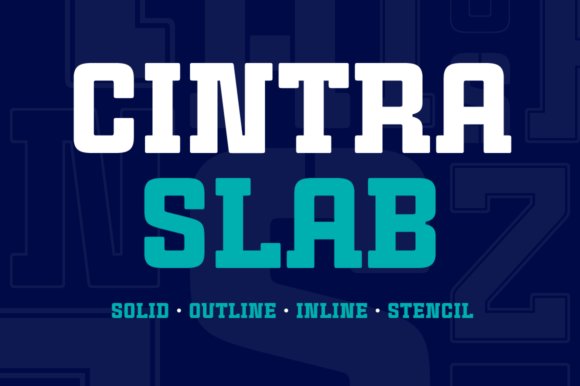
At its core, Cintra is a geometric sans serif typeface. Geometric typefaces are based on simple shapes—circles, straight lines, and uniform curves—and Cintra follows this tradition closely. What sets it apart is the deliberate softening of its corners and terminals. Instead of sharp, mechanical edges, each letterform carries a slight rounding that reduces visual harshness. This design choice creates a friendly, approachable feel while retaining the clarity and structure expected from geometric fonts.
The family includes eight styles, which typically means a range of weights—from light to heavy—and possibly matching italics. For a bold geometric face, this range allows you to use the same typeface across headlines, subheadings, and short body text without switching families. Pablo Balcells designed Cintra specifically for Graviton Font Foundry, a foundry known for producing clean, functional typefaces with a contemporary edge. The combination of geometric construction and rounded softness makes Cintra suitable for projects that need a strong visual presence with a human touch.
Why You Might Consider Cintra
If you are researching typefaces for branding, packaging, or display purposes, Cintra deserves attention for several reasons. First, its bold geometric structure commands attention. Headlines set in Cintra stand out because the letterforms are wide, consistent, and evenly spaced. The subtle rounding prevents the typeface from feeling cold or industrial, which is a common tradeoff with purely geometric fonts like Futura or Century Gothic.
Second, the eight-style family gives you breathing room. You can use a lighter weight for secondary text or a heavier weight for emphasis, all while maintaining visual harmony. For designers who want a unified brand voice without managing multiple families, this internal consistency is practical.
Third, Cintra's soft angles improve legibility at larger sizes. While geometric typefaces can become harsh when scaled up, the rounded terminals soften the overall impression. This makes Cintra a strong candidate for logos, signage, posters, and digital interfaces where the type needs to be both readable and distinctive.
Practical Benefits of the Cintra Family
From a practical standpoint, Cintra offers several advantages for specific use cases. Its geometric construction ensures that characters remain recognizable even when compressed or stretched, which is useful for responsive web design or flexible branding systems. The uniform stroke width across weights also means that the typeface reproduces well in different media, from print to screen.
Another benefit is the soft, pleasant appearance that Pablo Balcells achieved through careful curve adjustments. This quality reduces eye strain in display settings and makes the typeface feel more approachable than many competitors. For brands that want to communicate modernity without aggressiveness, Cintra strikes a useful middle ground.
Additionally, because Cintra was designed as a family, each style shares consistent metrics such as x-height, ascender and descender lengths, and spacing. This means that mixing weights within a layout does not require manual adjustment of leading or tracking. For production workflows, this consistency saves time and reduces errors.
Tradeoffs and Considerations
No typeface is universally perfect, and Cintra has tradeoffs that matter depending on your project. The most significant is its limited suitability for long-form body text. Geometric typefaces, including Cintra, tend to have less variation in character shapes, which can make extended reading tiring. The uniform curves and straight lines reduce the visual cues that help readers distinguish letters quickly. For paragraphs of body copy, a humanist or transitional sans serif will likely perform better.
Another consideration is the bold nature of the family. While Cintra includes multiple weights, its default appearance leans toward heavier and more assertive. If your project requires a delicate or minimal aesthetic, a lighter geometric sans serif might be more appropriate. The eight styles do offer lighter variants, but the overall design DNA remains bold and structured.
Licensing and availability are also practical factors. As a font from Graviton Font Foundry, Cintra is a commercial typeface. Before committing, verify the licensing terms for your intended use—whether it is for a single project, a brand toolkit, or embedding in an application. Some foundries offer trial versions or webfont licenses, so check the options to avoid unexpected costs.
Where Cintra Excels
Cintra is a strong fit for projects where visual impact is the priority. Branding and identity work benefit from its bold, geometric presence. Logos, taglines, and brandmarks set in Cintra convey confidence and modernity without feeling aggressive. The soft rounding adds a layer of warmth that helps brands appear approachable while maintaining a professional edge.
Packaging design is another area where Cintra performs well. Its clean lines and consistent spacing make it readable at small sizes on product labels, while its heavier weights stand out on shelves. The soft angles also interact well with organic or natural product aesthetics, where a purely geometric font might feel out of place.
Digital interfaces, particularly for headlines, buttons, and navigation, benefit from Cintra's clarity. The rounded terminals improve readability on screens, and the geometric structure ensures that characters remain distinct even at lower resolutions. For mobile apps or websites that need a bold typographic voice, Cintra offers a reliable option.
Posters, signage, and environmental graphics are natural applications for a bold geometric typeface. Cintra's uniform shapes and strong presence make it legible from a distance, and the softness prevents it from feeling too stark in built environments. Event branding, conference materials, and retail signage are all contexts where Cintra can shine.
When Alternatives Are Worth Exploring
If your project relies heavily on long-form reading—such as articles, reports, or books—Cintra is not the ideal choice. A humanist sans serif like Frutiger, Source Sans, or Open Sans will offer better readability for body text. These typefaces have more varied letterforms and generous spacing, which reduce reader fatigue over extended passages.
For projects that require a minimal or lightweight aesthetic, consider a thinner geometric sans serif such as Montserrat Light or Raleway. While Cintra includes lighter weights, its overall design leans toward a bolder expression. If your brand identity demands subtlety or elegance, a lighter geometric face may align better with your goals.
If you need a typeface with extensive language support or advanced OpenType features—such as stylistic alternates, ligatures, or small caps—review Cintra's character set carefully. Some geometric families offer broader language coverage or more typographic features. For multilingual projects or complex layouts, you may need a more feature-rich alternative.
Finally, if budget constraints are a concern, there are free geometric sans serif fonts available, such as Metropolis or Barlow. These options provide similar geometric structure without the licensing cost. However, they may lack the refined rounding and family consistency that Cintra offers. Weigh the tradeoff between cost and design quality based on your project's demands.
Decision-Making Insights
To determine whether Cintra aligns with your goals, start by evaluating the primary purpose of the typeface. If your project is headline-driven, brand-focused, or display-oriented, Cintra deserves serious consideration. Its bold geometric structure and soft angles provide a distinctive look that balances strength with warmth.
Next, assess the reading environment. If the type will appear mostly at large sizes—posters, logos, headings, packaging—Cintra's strengths align well with those contexts. If body text or dense information is involved, plan to pair Cintra with a more readable secondary typeface. A humanist sans serif or a serif font often complements Cintra effectively.
Consider the family size. Eight styles give you enough range for most branding systems, but if you need a wider weight spectrum or more italic variants, you may need to supplement Cintra with another family. For many projects, eight styles are sufficient to create hierarchy and variety without overcomplicating the design.
Finally, test Cintra in your actual medium. Download trial versions if available and set sample text at different sizes and weights. Evaluate how the rounded angles behave on screen versus in print. Check legibility at the sizes you will use most. Practical testing always provides better insight than theoretical evaluation alone.
Final Considerations
The Cintra family occupies a specific niche within the sans serif landscape. It is not a universal workhorse, but it excels where other geometric typefaces might feel too cold or too generic. Pablo Balcells' design for Graviton Font Foundry delivers a bold, structured typeface with a soft, pleasant finish that many brands and designers will find appealing.
If your project needs visual strength, geometric consistency, and a touch of warmth, Cintra is a strong candidate. If your primary need is extended readability, minimal weight, or extensive typographic features, you may want to explore alternatives. By understanding both the strengths and limitations of the Cintra family, you can make an informed decision that serves your content and your audience effectively.