Rauda Family: Exploring the Bold Sans Serif Display Font from Graviton Foundry
Typography is the backbone of visual communication. Whether you are designing a brand identity, a website header, or a printed poster, the choice of typeface can make or break the message. Among the vast landscape of modern fonts, the Rauda family stands out as a striking example of how sharp angles and geometric precision can create a strong, solid presence. Designed by Pablo Balcells for the Graviton Foundry, Rauda is not just another sans serif display font—it is a carefully crafted system of eight distinct styles, each built to support multilingual communication. In this article, we will explore everything you need to know about Rauda: its design philosophy, practical applications, and why it matters in today's creative world.
What is the Rauda Family?
The Rauda family is a collection of eight sans serif display fonts, each sharing a common DNA of sharp, angular forms. Unlike many display fonts that rely on curves and soft transitions, Rauda embraces straight lines and acute angles to deliver a visual punch. This makes it particularly effective for headlines, logos, and any context where you need to command attention without appearing overly decorative.
Each style within the family retains the core characteristics of the original design while offering variations in weight, width, and proportion. This means you can use Rauda to build a consistent visual hierarchy across different media, from bold and condensed variants for tight spaces to more expanded versions for dramatic impact.
The Designer and Foundry Behind Rauda
Pablo Balcells is the creative mind behind Rauda. As a type designer associated with the Graviton Foundry, Balcells has a reputation for blending contemporary aesthetics with functional rigour. The Graviton Foundry itself is known for producing fonts that balance artistic expression with real-world usability, and Rauda exemplifies this approach.
Balcells set out to create a typeface that feels both modern and timeless. The sharp angles in Rauda are not arbitrary—they are the result of deliberate design choices aimed at evoking strength, stability, and clarity. Every glyph is constructed with straight lines and crisp intersections, giving the font an almost architectural quality.
Understanding the Eight Styles of Rauda
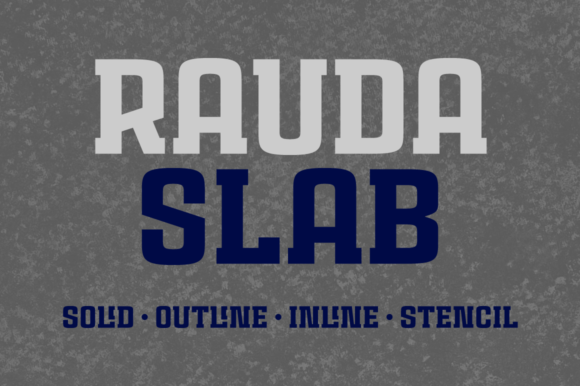
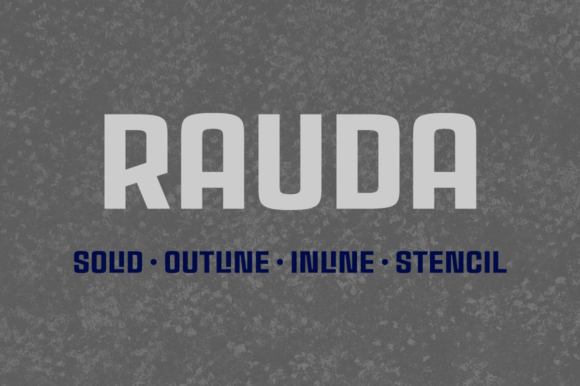
One of the most practical features of the Rauda family is its range of eight different styles. Having multiple styles within a single typeface family allows designers to maintain visual consistency while adapting to different contexts. Here is a breakdown of what these styles typically offer:
- Regular – The standard weight, ideal for general headline use.
- Bold – A heavier version that increases impact without sacrificing legibility.
- Light – A thinner variant suitable for elegant or minimalist applications.
- Condensed – Narrower proportions, perfect for fitting longer text into tight spaces.
- Extended – Wider letterforms that create a spacious, airy feel.
- Italic – A slanted version that adds dynamic energy while maintaining the angular structure.
- Outline – A hollow variant that works well for layered typography or decorative use.
- Black – An ultra-heavy weight for maximum boldness in large formats.
Each of these styles has been carefully drawn to preserve the distinctive sharp angles that define the Rauda aesthetic. This means you can mix and match them within a single project and still achieve a cohesive look.
Multilingual Support: Why It Matters
In an increasingly globalized world, fonts must do more than just look good in English. Rauda includes multilingual support across all eight styles, meaning it can handle a wide range of languages and scripts. This is a critical feature for brands, publishers, and designers who work with international audiences.
Typical multilingual support in Rauda covers Latin-based languages (including diacritics and special characters used in French, German, Spanish, Portuguese, and many others), as well as extended character sets for Central and Eastern European languages. This level of coverage ensures that your typography remains consistent and readable, no matter the language.
For businesses or organizations that operate across borders, using a font like Rauda eliminates the need to switch typefaces when translating content. You maintain brand coherence while respecting linguistic diversity.
The Design Philosophy: Sharp Angles and Solid Appearance
What truly sets Rauda apart is its commitment to sharp angles. In a world where many sans serif fonts lean toward rounded, friendly, or neutral forms, Rauda makes a statement. The angular strokes convey a sense of precision, confidence, and modernity. This is not a font that tries to be invisible—it is designed to be noticed.
The sharp angles are not aggressive or unwelcoming; rather, they communicate stability and structure. Think of a well-engineered bridge or a modern skyscraper. The straight lines and clear intersections suggest something built to last. This makes Rauda particularly suitable for brands in technology, architecture, finance, law, and any field where trust and professionalism are paramount.
At the same time, the font retains excellent readability at display sizes. The generous x-height and open counters (the enclosed spaces inside letters like "e" and "a") ensure that even at large sizes, the text remains legible. This is a delicate balance that not all display fonts achieve.
Practical Applications of Rauda in Modern Design
Understanding the characteristics of Rauda is one thing, but seeing how it can be used in real-world projects brings its value to life. Here are several contexts where the Rauda family shines:
Brand Identity and Logo Design
Because of its strong, angular appearance, Rauda is an excellent choice for logos. A brand that wants to project authority, innovation, or durability can leverage Rauda's geometric clarity. The multiple styles allow for a flexible brand system—use the regular weight for the primary logo, and the condensed or bold variants for sub-brands or taglines.
Website Headlines and Hero Sections
On the web, first impressions matter. A hero section with a headline set in Rauda immediately grabs attention. The sharp angles create a sense of modernity that pairs well with minimalist layouts, bold color schemes, or high-contrast photography. Because Rauda supports multilingual characters, you can also serve international visitors without compromising on design.
Posters, Banners, and Signage
When you need to communicate a message from a distance, legibility is key. Rauda's solid forms and clear letter shapes ensure that your text remains readable even at large sizes. Whether it's a concert poster, a trade show banner, or directional signage, Rauda delivers impact without confusion.
Editorial and Magazine Design
For covers, section titles, and pull quotes, Rauda provides a distinctive voice. Its angularity contrasts nicely with body text fonts that are usually more rounded or serif-based. This contrast creates visual interest and helps guide the reader through the layout.
Packaging and Product Design
Packaging is often the first physical touchpoint a customer has with a brand. Using Rauda on product labels, boxes, or tags reinforces a sense of quality and attention to detail. The outline or light variants can be used for subtle accent text, while the bold and black weights dominate the primary information.
Common Misunderstandings About Display Fonts Like Rauda
Some designers assume that display fonts are only for large sizes and cannot be used in smaller text. While it is true that Rauda is optimized for display purposes—typically 24 points and above—its clean shapes and good legibility mean it can sometimes be used for short body text in controlled situations, such as captions or small labels. However, for extended reading, a complementary text font is recommended.
Another misconception is that sharp-angled fonts feel cold or unwelcoming. In practice, the emotional tone of a typeface depends heavily on context, color, and accompanying imagery. Rauda can feel warm and inviting when paired with the right palette and visual elements. The key is to consider the overall composition rather than judging the font in isolation.
Finally, some may think that a font with eight styles is overly complex. In reality, having multiple styles within a family simplifies the design process. You no longer need to hunt for matching fonts—everything is already designed to work together harmoniously.
How Rauda Fits into Modern Workflows
Typography today is not just about static print. Digital designers, web developers, and content creators need fonts that perform across platforms. Rauda is available in modern formats such as WOFF and WOFF2 for the web, as well as OTF and TTF for desktop use. This makes it easy to integrate into websites, apps, and electronic documents.
Furthermore, the multilingual support means that a single font file can serve a global audience. This simplifies the technical setup for developers and reduces the number of font files that need to be loaded, which can improve website performance.
For educators and students studying typography, Rauda offers a clear example of how geometric construction works in type design. Analyzing its letterforms can deepen one's understanding of contrast, proportion, and the relationship between form and function.
Tips for Using Rauda Effectively
To get the most out of the Rauda family, consider these practical guidelines:
- Pair it with a neutral body font. Since Rauda has a strong personality, choose a simple sans serif or serif for body text to maintain balance.
- Use contrast wisely. Combine bold and light weights to create hierarchy without adding extra elements.
- Avoid over-angularity in soft contexts. If your brand is very organic or handcrafted, use Rauda sparingly or in lighter weights.
- Test at different sizes. What works at 72 points may look different at 36 points. Always preview your designs at the intended output size.
- Leverage the multilingual support. If your project has multiple language versions, use Rauda across all of them for consistency.
Conclusion: Why Rauda Deserves a Place in Your Toolbox
The Rauda family is more than just a collection of sharp-angled sans serif fonts. It is a thoughtfully designed system that balances aesthetic impact with practical versatility. Pablo Balcells and the Graviton Foundry have created a tool that meets the needs of modern designers: eight styles, multilingual support, and a strong, solid appearance that stands out without sacrificing readability.
Whether you are building a brand from scratch, revamping a website, or working on a print project that demands attention, Rauda offers the range and reliability to bring your vision to life. Its sharp angles communicate strength and clarity, while its multiple styles give you the flexibility to adapt to any context. In a crowded typographic market, Rauda earns its place by being both distinctive and dependable.
Take the time to explore each of the eight styles. Experiment with weights, widths, and combinations. You may find that Rauda becomes one of your go-to fonts for projects that require a bold, modern, and confident voice.