Caveman Family: What to Expect from a Rustic, Prehistoric-Inspired Font
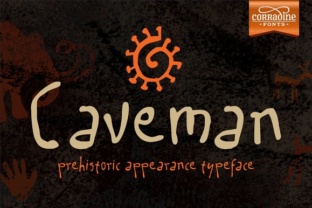
When you first encounter the Caveman Family, the name tells you a lot. This is not a sleek, modern sans-serif or a delicate script. It is a deliberately rough, textured font family that draws direct inspiration from prehistoric cave art—those early moments when humans first pressed pigment to stone to express something real. The letterforms carry an uneven, chiseled quality. Strokes vary in weight. Edges feel raw, almost carved. For designers, marketers, and creators looking to evoke authenticity, history, or a primal kind of energy, this font family offers something genuinely different. But that difference also brings risks. Many people pick up fonts like this one without fully understanding where they shine—and where they absolutely do not.
Why the Raw Look Works for Certain Audiences
Caveman Family taps into something deeper than visual style. It connects to the earliest human need to communicate through marks on a surface. That emotional undercurrent is powerful. For brands selling handmade goods, outdoor gear, natural foods, or historical content, this font can feel like a perfect fit. It says we are not polished. We are real. But that same rawness can backfire if you apply it thoughtlessly. The mistake many beginners make is assuming that any project with a rustic theme deserves this font. That is not true. A farmers market logo might benefit. A corporate sustainability report probably will not. Understanding where the line falls saves you time, money, and visual credibility.
Common Mistake: Treating Rustic as Unprofessional
One of the biggest misunderstandings about Caveman Family is the assumption that rough equals amateur. Some creators avoid it entirely, worried that uneven lettering will make them look careless. Others use it too casually, not realizing that deliberate imperfection requires just as much skill as perfect geometry. The truth sits in the middle. A font like this is not a shortcut to authenticity. It is a tool that demands intentionality. When used on a poster for a heritage festival, the rough edges reinforce the theme. When used on a law firm website, they create confusion. The mistake is not in choosing a rustic font. It is in choosing it without considering what your audience expects.
How to Check if Caveman Family Fits Your Project
Before you download or buy, ask yourself three questions. First, does the subject matter connect to nature, history, or primal themes? Second, will your audience interpret rough edges as intentional or sloppy? Third, does the rest of your design support the same mood? If you answer yes to all three, you are probably on safe ground. If you hesitate on any of them, consider a simpler serif or a neutral slab font instead. There is nothing wrong with setting Caveman Family aside for a future project. The smartest creators maintain a library of fonts they love but use sparingly.
The Overlooked Problem of Readability at Small Sizes
This is where Caveman Family trips up even experienced designers. Because the font is inspired by cave paintings, the letterforms are not optimized for small text. Details get lost. Strokes blend together. At 10 or 12 points, a headline font becomes a blur. Yet people keep trying to use it for body copy, captions, or footnotes. The result is text that strains the eyes and frustrates readers. I have seen small business owners create beautiful product labels with this font, only to shrink the ingredient list to a size where nobody can read it. That is not a font problem. That is a sizing problem.
Practical advice: Reserve Caveman Family for headings, titles, logos, and display text above 24 points. For anything smaller, pair it with a clean, readable companion font. A simple sans-serif like Open Sans or Lato works well. The contrast between rough display text and smooth body text actually enhances both. Your prehistoric-inspired heading grabs attention, while the body copy remains comfortable to read. This combination respects the font's character without sacrificing usability.
Pairing Mistakes That Undermine the Whole Design
Font pairing is an art, and Caveman Family is not an easy partner. Its strong personality can overpower almost anything you place next to it. The most common mistake is pairing it with another decorative font. Two rough fonts together create visual chaos. Another frequent error is using a font that is too modern or corporate, which creates a jarring clash. The sweet spot is a neutral, understated companion that does not compete. Think of Caveman Family as the lead singer. Everything else should be the backup band.
- Do pair with: simple sans-serifs, clean serifs, or monospace fonts that have a flat, quiet presence.
- Avoid pairing with: script fonts, other rustic or grunge fonts, or anything with extreme contrast.
- Test in context: Create a mockup of your actual project—website header with body text, poster with subheadings, label with nutritional info. Do not rely on font preview pages alone.
Downloading and Licensing: What You Need to Verify
Because Caveman Family has a distinctive look, it is widely copied and redistributed without proper licensing. I have seen freelancers download a free version from a questionable site, only to discover later that the license did not cover commercial use. By then, the design has been printed, posted, or published. Fixing that mistake costs money and time. Worse, it can create legal exposure if the original foundry enforces their terms.
What to check before you purchase or download: Confirm the foundry or designer behind Caveman Family. Verify the license type—personal, commercial, or extended. Understand whether you can use it in logos, merchandise, digital ads, or printed materials. If a price seems too good to be true, it probably is. Legitimate font families at this level of design quality rarely come free for commercial work. Paying for the proper license is not an expense. It is an investment in your professional integrity and your peace of mind.
Applying Effects That Destroy the Font's Character
Another overlooked detail: Caveman Family already looks raw. Adding drop shadows, bevels, textures, or heavy outlines often ruins the effect. I have seen designers take this font and layer on grunge filters, thinking it will amplify the rustic feel. Instead, it becomes muddy and unreadable. The font's charm lies in its organic imperfections. Let them breathe. If you must add an effect, keep it subtle. A soft paper texture in the background can work well. A heavy embossed effect will likely fight against the letterforms and create a mess.
A Better Approach to Texture and Layering
If your project calls for extra texture, apply it to the background or surrounding elements, not to the text itself. Use Caveman Family in a solid, dark color on a slightly textured surface. That gives you the rustic feeling without compromising legibility. You can also experiment with opacity or blending modes in small doses, but always preview at actual size. What looks dramatic on a zoomed-in screen often looks chaotic at full scale.
Misunderstanding the Audience for Rustic Fonts
Not everyone responds to rustic design the same way. Younger audiences might see it as nostalgic or cool. Older professionals might perceive it as unrefined. Entrepreneurs marketing to high-end clients should think twice before using Caveman Family in formal communications. That does not mean the font is bad. It means it serves a specific emotional niche. When you use it, you are making a statement about your brand's values—raw, honest, connected to nature. If your actual brand message is about precision, luxury, or efficiency, the font will contradict you.
Example scenario: A small bakery selling sourdough bread chose Caveman Family for their chalkboard-style menu. It worked because sourdough is a traditional, handmade product. The rough lettering echoed the rustic feel of the bakery itself. Customers responded well. That same font on a tech startup's pitch deck would create confusion. The audience would wonder if the company was intentional or just careless. Know your context before you commit.
What to Evaluate Before Making a Decision
Before you buy, download, or commit to using Caveman Family in a project, run through a short checklist. First, test the font at the actual sizes you plan to use. Second, pair it with your body font and evaluate the combination in a realistic layout. Third, confirm your license covers your specific use case. Fourth, show the design to someone who does not already love the font. Get their honest reaction without explaining your reasoning. If they pause or hesitate, you may have a mismatch. Fifth, consider whether a simpler alternative might serve your purpose better. Sometimes a basic serif or a straightforward sans-serif communicates rustic themes more effectively through color and imagery alone, without the readability tradeoff.
Caveman Family is a remarkable font when used with intention. It carries the weight of human history in its strokes. But that weight also demands respect. Do not treat it as a decorative novelty. Treat it as a deliberate design choice that shapes how people perceive your work. When you get it right, the effect is memorable. When you get it wrong, it undermines everything else you have built. Take the time to evaluate, pair, and test. Your audience will notice the difference, even if they cannot name it.