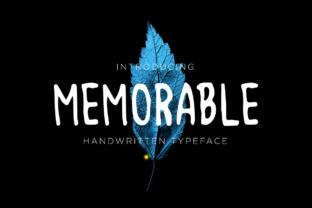
Memorable: A Modern Hand-Drawn Font with Character
In a digital landscape dominated by sleek, uniform typefaces, the desire for something more human and expressive has never been stronger. Enter Memorable, a modern hand-drawn font created by designer Kang1993. This typeface brings a refreshing sense of authenticity to any project, bridging the gap between polished design and the warmth of handcrafted lettering. But what exactly makes a hand-drawn font stand out in a crowded market, and who stands to benefit most from its unique personality? Let's explore the purpose, features, and real-world value of Memorable.
The Story Behind Memorable
Every font has a story, and Memorable is no exception. Created by Kang1993, a designer known for blending contemporary aesthetics with a handcrafted touch, this font was conceived as a response to the impersonal nature of many digital typefaces. The goal was simple: to create a typeface that feels like it was written by hand, yet remains versatile enough for modern design workflows.
The name itself hints at its core mission—Memorable aims to leave a lasting impression. Unlike rigid, geometric fonts that blend into the background, this typeface captures attention through its organic strokes, slight irregularities, and natural rhythm. It's a font designed to be noticed, but not at the expense of readability.
Key Features and Characteristics
Memorable distinguishes itself through a set of carefully crafted features that make it both functional and expressive. Here's what you can expect from this modern hand-drawn font:
- Authentic hand-drawn aesthetic: Every character carries subtle variations in stroke weight, angle, and spacing, mimicking the natural inconsistencies of real handwriting.
- Modern yet approachable tone: While it has a casual, friendly feel, the font avoids being overly whimsical, making it suitable for a wide range of professional contexts.
- Good readability across sizes: Despite its hand-drawn nature, Memorable maintains clarity in both headlines and body text, which is a common pain point for many script-style fonts.
- Versatile character set: The font includes uppercase and lowercase letters, numerals, punctuation, and often multilingual support, making it practical for global audiences.
- Natural flow and rhythm: The letterforms are designed to connect and flow smoothly, giving text a cohesive, handwritten feel without sacrificing legibility.
These characteristics make Memorable more than just a decorative typeface—it's a practical tool for anyone who wants to add a human touch to their digital or print projects.
Where Can Memorable Be Used?
One of the greatest strengths of Memorable is its adaptability. Because it balances personality with readability, it can be applied across a surprising range of contexts. Here are some of the most effective use cases:
- Branding and logos: Small businesses, creative agencies, and personal brands often use hand-drawn fonts to convey authenticity and approachability. Memorable works especially well for logos that need to feel friendly and handmade.
- Social media graphics: In an era where scrolling users stop for visual storytelling, a font like Memorable adds warmth to quotes, announcements, and promotional posts.
- Invitations and event materials: Wedding invitations, party flyers, and event programs benefit from the personal, celebratory feel of hand-drawn lettering.
- Product packaging: Artisanal products, handmade goods, and organic brands often use hand-drawn fonts to reinforce their authentic identity.
- Web design and digital content: Headlines, hero sections, and call-to-action buttons become more inviting when set in a font that feels human rather than mechanical.
- Print materials: Business cards, brochures, and posters gain a tactile, artisanal quality that stands out from standard corporate typography.
Whether you're a graphic designer, a small business owner, or a content creator, Memorable offers a way to infuse your work with personality without compromising on professionalism.
Who Benefits Most from Memorable?
While Memorable can be used by anyone, certain groups will find it especially valuable for their specific needs:
- Graphic designers and illustrators: Having a versatile hand-drawn font in your toolkit saves time and expands creative options. Memorable can be used as a standalone typeface or mixed with other styles for contrast.
- Small business owners and entrepreneurs: Building a brand on a budget means making every design choice count. A font like Memorable helps create a distinctive visual identity without hiring a custom lettering artist.
- Content creators and influencers: Consistent, recognizable typography helps build a personal brand. Using Memorable across social media, YouTube thumbnails, and website headers creates a cohesive look.
- Event planners and wedding coordinators: Hand-drawn fonts are a staple in event design, and Memorable offers a modern alternative to overused script fonts.
- Educators and non-profits: Organizations that want to communicate warmth and approachability benefit from fonts that feel less corporate and more human.
Essentially, if your work involves communicating a message that should feel personal, welcoming, or creative, Memorable is worth considering.
Strengths and Considerations
No font is perfect for every situation, and understanding both the strengths and limitations of Memorable will help you use it effectively.
Strengths
- High emotional impact: Hand-drawn fonts naturally evoke feelings of warmth, creativity, and authenticity. Memorable excels at connecting with audiences on an emotional level.
- Versatility across media: It performs well in both digital and print environments, which is not always the case with hand-drawn typefaces.
- Time-saver for designers: Instead of hand-lettering from scratch, you can achieve a similar effect instantly with Memorable, making it a practical choice for fast-paced projects.
- Distinctive without being distracting: The font has personality, but it doesn't sacrifice readability, which is a delicate balance that many hand-drawn fonts fail to achieve.
Considerations and Limitations
- Not ideal for large blocks of text: Like most hand-drawn fonts, Memorable is best used sparingly. Long paragraphs set entirely in this style can become tiring to read.
- May not suit formal or corporate contexts: If your brand requires a conservative, highly professional appearance, a more traditional serif or sans-serif font might be a better fit.
- Pairing matters: To get the best results, you'll want to pair Memorable with a neutral, easy-to-read font for body text. This requires some design thought.
- Licensing and file formats: Always check the specific license terms (personal vs. commercial) and ensure you have the right file format (OTF, TTF, WOFF) for your project.
Being aware of these points will help you deploy Memorable in ways that maximize its impact while avoiding common pitfalls.
Real-World Scenarios and Applications
To give you a clearer picture of how Memorable performs in practice, here are a few realistic scenarios:
- Scenario: A local coffee shop rebranding. The owner wants a logo and menu that feel cozy and artisanal. Using Memorable for the logo and select menu headers, paired with a clean sans-serif for the body, creates a warm yet readable brand identity that resonates with customers.
- Scenario: A wedding invitation suite. The couple wants modern, minimalist invitations with a personal touch. Memorable is used for the couple's names and key details, while a subtle serif font handles the finer text. The result is elegant, personal, and memorable.
- Scenario: A fitness influencer's social media. The influencer uses Memorable for motivational quote posts and story headlines. The hand-drawn feel adds authenticity and helps the content stand out in a crowded feed.
- Scenario: A children's book illustrator. The illustrator uses Memorable for chapter titles and dialogue labels, complementing the hand-drawn illustrations and creating a cohesive visual world.
These examples show how Memorable can adapt to different tones and purposes, from commercial branding to personal projects.
How to Evaluate If Memorable Is Right for Your Project
Choosing a font is a strategic decision. Here's a simple framework to determine whether Memorable suits your needs:
- Define your tone: Is your brand or project warm, creative, or personal? If yes, Memorable is a strong candidate. If the tone is formal, technical, or corporate, you might want to use it only for accent elements.
- Consider readability needs: Will the font be used for headlines only, or does it need to work in body text? Memorable shines in headlines, but for extended reading, use it sparingly.
- Test in context: Always preview the font in your actual design layout. See how it looks at different sizes, on different backgrounds, and alongside other fonts.
- Check licensing for your use case: Ensure you have the appropriate license for commercial use, web embedding, or app integration.
- Think about audience expectations: A hand-drawn font will resonate differently with different demographics. Consider whether your audience will perceive it as authentic and approachable or as too casual.
By approaching font selection with these criteria, you'll make informed choices that serve your project's goals.
Final Thoughts on Memorable
Memorable by Kang1993 is more than just another hand-drawn font—it's a thoughtful tool for anyone who wants to communicate with warmth, personality, and clarity. Its modern aesthetic, combined with practical features like good readability and versatile character support, makes it a valuable addition to any designer's toolkit. Whether you're building a brand, designing an invitation, or creating content for social media, Memorable offers a way to stand out without sacrificing professionalism.
As with any design resource, the key is to use it intentionally. Pair it wisely, respect its limitations, and let its hand-drawn character shine where it matters most. When used well, Memorable lives up to its name—it helps your work become truly unforgettable.