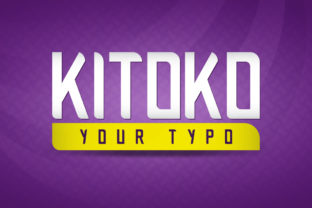
Kitoko: Where Strength Meets Softness in Display Typography
When you first encounter Kitoko, something interesting happens. You notice the confident structure first—the bold weight, the commanding presence that demands attention. Then, almost immediately, something softer emerges. A gentle curve here. A subtle roundness there. This interplay between strength and softness is not accidental. It is the signature of Audry Kitoko Makalele, the designer behind this distinctive display font.
Kitoko is not trying to be everything to everyone. It is a display typeface, which means it excels when you use it for headlines, titles, logos, posters, and anything that needs to be seen before it is read. But what makes it stand out in a crowded field of display fonts is its ability to communicate two things at once: authority and approachability.
Let us explore what this means in practice, why it matters, and how you might put Kitoko to work in your own projects.
What Kitoko Offers That Other Fonts Do Not
Most display fonts lean hard in one direction. They are either bold and aggressive, or elegant and delicate. Kitoko refuses that trade-off. It carries weight without feeling heavy. It has presence without pushing people away. That is a rare balance, and it is exactly what makes this font useful for a broad range of creators.
The letterforms are carefully constructed. Each character feels solid, with a strong vertical axis and confident proportions. Yet the terminals often soften into rounded ends, and the curves avoid sharp corners. The result is a typeface that feels both modern and welcoming.
If you have ever struggled to find a font that feels professional but not cold, or distinctive but not distracting, Kitoko might be the answer you have been looking for.
Who Benefits from Using Kitoko
Because Kitoko occupies this unique space between strength and gentleness, it works well for a wide variety of people and purposes.
- Freelancers and creative professionals who need a signature font for their brand identity can use Kitoko to signal confidence without arrogance.
- Small business owners designing their own marketing materials will find that Kitoko elevates posters, flyers, and social media graphics without requiring advanced design skills.
- Bloggers and content creators looking for a distinctive headline font can rely on Kitoko to make their titles stand out in a crowded feed.
- Educators and hobbyists creating presentations, handouts, or personal projects will appreciate how the font adds polish with minimal effort.
- Marketers and entrepreneurs developing product packaging, event banners, or website headers can use Kitoko to communicate both reliability and warmth.
The common thread here is that all these people need their message to be noticed, but they also want it to feel inviting. Kitoko helps them achieve both goals simultaneously.
Practical Uses for Kitoko in Real Projects
Understanding a font's personality is one thing. Knowing where to actually use it is another. Let us look at some realistic scenarios where Kitoko shines.
Branding and Logo Design
If you are building a brand from scratch or refreshing an existing one, the font you choose for your logo matters enormously. Kitoko works particularly well for brands that want to communicate strength with a human touch. Think of a local café that takes its craft seriously but wants customers to feel at home. Or a consulting firm that offers expert advice without the corporate stiffness. Kitoko can carry that dual message in a single wordmark.
The font also pairs nicely with simpler sans-serif typefaces for body text, giving you a complete typographic system that feels cohesive without being monotonous.
Posters and Print Collateral
Display fonts are born for print, and Kitoko is no exception. Event posters, conference banners, and product launch materials all benefit from its readable yet distinctive letterforms. Because the font is bold but not harsh, it works well at large sizes where every detail becomes visible.
Consider a music festival poster or a community event flyer. Kitoko can anchor the headline while softer supporting fonts handle the details. The contrast between the strong display face and lighter body text creates visual hierarchy naturally.
Digital Headlines and Social Media
In the digital space, capturing attention is harder than ever. Kitoko helps your headlines break through the noise. YouTube thumbnails, Instagram carousel titles, blog post headers, and landing page hero sections all benefit from a font that commands attention without feeling aggressive.
Because Kitoko remains readable even at smaller sizes for a display font, it also works well for subheadings and short callouts within digital content. This versatility saves you from juggling multiple typefaces for every project.
Product Packaging and Labels
Small businesses and artisans who package their own products know that packaging is often the first physical interaction a customer has with the brand. Kitoko brings a handmade yet professional feel to labels, boxes, and tags. Whether you are selling candles, coffee, skincare products, or handmade goods, the font adds a layer of intentionality to your packaging design.
Things to Consider Before Using Kitoko
No font is perfect for every situation, and Kitoko has its own considerations worth understanding before you commit to it.
It Is a Display Font First
Kitoko is not designed for long body text. Using it for paragraphs or dense information will tire the reader and reduce readability. Reserve Kitoko for headlines, titles, short phrases, and emphasis. Pair it with a clean, neutral body font for extended reading material. This is not a limitation—it is a best practice that many experienced designers follow with any display typeface.
Consider Your Audience and Context
Kitoko carries a modern, approachable personality. It suits contemporary brands and creative projects well. If your project requires a highly formal, traditional, or strictly corporate tone, you might want to explore more neutral or classic options. Always let the content and audience guide your font choice, not the other way around.
Licensing and Usage Rights
Before using Kitoko in commercial projects, check the licensing terms. Some fonts require separate licenses for web use, desktop use, or embedding in digital products. Understanding these terms upfront saves you from legal headaches later. If you are a freelancer or small business owner on a budget, look for licensing options that match your actual needs rather than paying for rights you will never use.
Testing in Your Actual Context
Fonts look different on screen versus in print, and they behave differently across operating systems and browsers. Always test Kitoko in the environment where it will actually appear. Create a mockup, preview it on your website, or print a sample before finalizing your design. This simple step prevents surprises and ensures the font performs as expected.
Why Kitoko Resonates with Creators Today
There is a reason fonts like Kitoko gain traction. In a visual culture that often oscillates between sterile minimalism and chaotic overcrowding, Kitoko offers a middle path. It is deliberate without being rigid. It is friendly without being childish. It is strong without being intimidating.
This balance reflects a broader shift in how people want to communicate. Whether you are building a personal brand, launching a product, or teaching a class, you want to be taken seriously, but you also want to connect. Kitoko helps you do both.
Audry Kitoko Makalele created a typeface that carries a name and a personality. If you are looking for a display font that stands out while staying approachable, it is worth exploring what Kitoko can bring to your next project. Try it in a headline, a logo, or a poster. See how it feels. Sometimes the right font is the one that says what you mean before anyone reads a single word.