Draft Cheese: A Practical Typeface for Real Workflows
In any creative or professional process, the tools you choose shape not only the final output but also how you get there. Typography is one of those quiet but constant companions. It affects readability, tone, and even your own momentum as you work. Draft Cheese, a typeface from Blessed Print, is designed with this in mind. It is not a decorative afterthought. It is a working tool that fits into planning, execution, review, and refinement stages across many contexts.
This article explores what Draft Cheese is, where it belongs in a broader process, and how you can integrate it into your own workflows, whether you are designing a brand, building a website, drafting a presentation, or organizing personal projects.
What Draft Cheese Is and Why It Matters
Draft Cheese is a typeface that balances character with clarity. It carries a distinct personality without sacrificing legibility. That combination makes it useful for projects where you need to communicate a specific tone but cannot afford to confuse your audience. The font works well in headings, short blocks of text, and even as an accent in layouts. Its design is deliberate, not arbitrary.
Blessed Print, the foundry behind Draft Cheese, has a reputation for producing typefaces that feel intentional and grounded. Draft Cheese continues that tradition. It is a font that works in both digital and print environments, and it holds up well at various sizes. This versatility is one of its strongest features.
When you choose a typeface like Draft Cheese, you are making a decision about how your content will be received. It is not a neutral choice, and that is precisely the point. It adds texture to your communication without overwhelming it.
Where Draft Cheese Fits in a Workflow
Understanding where a typeface belongs in a process helps you use it more effectively. Draft Cheese is not a one-size-fits-all solution, but it does have a clear range of applications. It can enter your workflow at different points depending on what you are building.
Before a Project: Planning and Conceptualisation
During the early stages of a project, you are often exploring directions. You might be sketching ideas, creating mood boards, or testing visual concepts. Draft Cheese can help you establish a tone before you commit to a full design. Try setting a few key words or a short phrase in the font and see how it feels. Does it match the energy you want? Does it suggest a certain audience or context? This quick test can save you time later.
For example, if you are planning a blog redesign or a new brand identity, Draft Cheese can serve as a reference point. You do not need to use it in the final product. But having it in your palette during planning helps you make more informed typographic choices.
During a Project: Active Design and Content Creation
As you move into production, Draft Cheese becomes a practical tool. It works well for headlines, pull quotes, navigation labels, and short callouts. Because its design is distinctive, it can anchor a layout without needing much decoration around it. This saves time and reduces visual clutter.
If you are working with a team, Draft Cheese can also help maintain consistency. Share it as part of a style guide or design system. Everyone working on the project will have the same typographic reference, which reduces friction and rework.
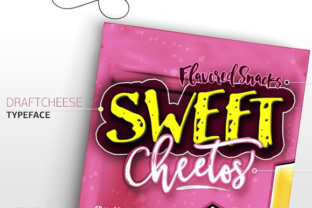
In content creation, Draft Cheese can be used in slide decks, social media graphics, email headers, and even printed materials like flyers or posters. Its readability at medium to large sizes makes it a reliable choice for on-screen and off-screen use.
After a Project: Review, Refinement, and Repurposing
Once a project is live, you might revisit it for updates or extensions. Draft Cheese remains useful here. If you need to produce additional assets, such as new pages, variations of a design, or marketing collateral, having a consistent typeface makes that process smoother. You do not need to rediscover your typographic choices.
For example, if you run a small business and you originally used Draft Cheese for your website headers, you can easily create new banners, social posts, or print ads that feel coherent with your existing brand. The font does the heavy lifting of maintaining visual continuity.
How Draft Cheese Interacts with Other Tools and Resources
No typeface works in isolation. Draft Cheese interacts with other elements in your stack, including software, platforms, other fonts, and your own design assets.
Software and Platforms
Draft Cheese is compatible with most design and layout tools, including Adobe Creative Cloud applications, Figma, Sketch, Affinity, and Canva. It also works in web design environments if you use web font formats. Check the licensing terms from Blessed Print to confirm usage for your specific context, especially for commercial projects or web embedding.
If you work in a content management system like WordPress, Squarespace, or Shopify, you can upload Draft Cheese as a custom font or link to it via a web font service if available. This allows you to maintain typographic consistency across your entire site.
Pairing with Other Fonts
Draft Cheese pairs well with simpler, more neutral typefaces. Use it for headings and pair it with a clean sans-serif or a highly legible serif for body text. This creates a clear hierarchy. For example, Draft Cheese for headlines and a font like Open Sans or Lato for paragraphs gives the page structure without competition between the typefaces.
Avoid pairing it with another highly decorative font. The result can feel busy and reduce readability. Instead, let Draft Cheese carry the personality while other fonts provide stability.
Assets and Brand Elements
Draft Cheese can reinforce your brand identity when used consistently. If you already have a logo, color palette, and imagery, adding Draft Cheese to your typography system can enhance recognition. Use it in key places where you want to make an impression, such as hero sections, product names, or taglines.
For personal projects, the font can help you establish a visual signature without needing a full design system. One consistent typeface across your portfolio, resume, or blog is often enough to create a cohesive look.
Practical Implementation Tips
Integrating Draft Cheese into your workflow does not require a major overhaul. Start small and expand as you become comfortable with the font.
- Start with one application. Choose a single project or asset type, such as your blog headers or a presentation deck, and apply Draft Cheese there. Evaluate how it feels before rolling it out to other areas.
- Test at different sizes. Draft Cheese performs well at medium to large sizes. Try it at 24px, 36px, and 48px for digital use. For print, test at 18pt, 24pt, and 36pt. Notice how the character shapes change with scale.
- Set spacing guidelines. Letter spacing and line height matter. Draft Cheese may need slight adjustments depending on the medium. For digital, 1.2 to 1.4 line height is a good starting range. Letter spacing of -0.01em to 0.02em can help readability.
- Use it in key positions. Reserve Draft Cheese for elements that benefit from its character. Headlines, subheads, quotes, and call-to-action buttons are good candidates. Avoid using it for long body text unless you test thoroughly for readability.
- Document your usage. If you work in a team or plan to reuse the font across projects, create a simple style sheet. Note which font pairings you use, where Draft Cheese appears, and any size or spacing preferences. This saves time and ensures consistency.
For a Small Business Owner
You run an online store. You use Draft Cheese for product headings and category titles. Your body text is a simple sans-serif. The font gives your store a distinctive look without complicating the layout. When you create new product pages or seasonal banners, you already know exactly which typeface to use. That consistency builds trust with your customers and speeds up your own design process.
For a Freelance Designer
You take on a branding project for a local café. The café wants a menu that feels handcrafted but readable. You use Draft Cheese for the section headers and pair it with a clean body font. The client appreciates the balance. Later, when the café asks for social media graphics and a website header, you extend the same typography system. The project stays cohesive from start to finish.
For a Blogger or Educator
You write a newsletter or run a course site. You apply Draft Cheese to your post titles and callout boxes. Readers start to associate that typographic style with your content. It becomes part of your identity. When you later release an ebook or a workbook, you use the same font for the chapter titles. Your audience recognises the material instantly.
Factors to Consider for Long-Term Use
Draft Cheese is not a temporary trend. It is a typeface you can rely on over time. But long-term use requires attention to a few factors.
Licensing. Confirm your license from Blessed Print covers all your intended uses, especially if you plan to use the font in commercial projects, on the web, or in products you sell. Licensing varies, and it is better to clarify upfront than to adjust later.
File format. Ensure you have the right file formats for your tools. OTF, TTF, WOFF, and WOFF2 cover most needs. If you work across different operating systems, test the font on all of them to catch any rendering differences.
Version updates. Fonts occasionally receive updates. Keep a copy of your original purchase in case you need to reinstall or roll back. Blessed Print may also release improvements, so check periodically if you rely on the font for active projects.
Backup system. Store your font files in a central location, such as a cloud folder or a company asset library. This prevents workflow disruptions if you change computers or onboard new team members.
Observations from Real Use
Draft Cheese rewards intentional use. It is not a font you set and forget. The most effective applications come from people who take the time to adjust spacing, test readability, and pair it thoughtfully. The font does not need extensive modification, but small refinements can elevate the final result.
The typeface also works well across media. Users report that it retains its character in print, on screens, and in motion graphics. This cross-medium stability is rare and valuable for anyone producing multi-platform content.
One common observation is that Draft Cheese encourages clarity. Because the font itself has personality, designers and content creators tend to simplify their layouts around it. The result is often cleaner and more focused than if they had used a neutral font and added decorative elements. The font does some of the work for you.
Final Thoughts on Integration
Draft Cheese is a practical addition to any workflow that values both character and function. Whether you use it in planning, active design, or post-project refinement, it serves as a reliable visual anchor. It integrates with your existing tools, pairs well with simple fonts, and helps maintain consistency over time.
The best way to understand its value is to try it in a real project. Pick a small, manageable use case. Apply Draft Cheese, observe how it affects the design and the process, and adjust as needed. That hands-on approach will tell you more than any description can.
Typography is not decoration. It is a tool for communication. Draft Cheese by Blessed Print gives you a distinctive, workable option for the projects that matter most.